Berkeley Art Museum
Lee ShinJa: Drawing with Thread
2025
Client Berkeley Art Museum
Project Lee ShinJa: Drawing with Thread

Berkeley Art Museum
Lee ShinJa
Drawing with Thread
Curator | Victoria Sung
August 6, 2025–February 1, 2026
A FILM SUPPORTED BY Tina Kim Gallery

크레딧 보기

Created for the Berkeley Art Museum and Pacific Film Archive
Archival research and documentation: Danji Lee, Hyunjin Jo
Supported by Tina Kim Gallery

Narration: Victoria Sung (BAMPFA), Sang Gon Jang (Lee ShinJa’s Son)

DIRECTOR AND EDITOR: MEEJEE LEE
CAMERA AND LIGHT: KANG ZOOEE & HWANG NAKWON
CAMERA TEAM: CHO WOONGHEE
SOUND RECORDIST: SON HYEIN
FILM BY 57STUDIO

작업 소개

57STUDIO는 티나킴 갤러리의 서포트로, 한국 섬유미술의 선구자 이신자 작가의 인터뷰 영상을 제작했다. 본 영상은 북미에서 처음으로 개최된 작가의 서베이 전시 《Lee ShinJa: Drawing with Thread》를 계기로 제작되었으며, 1950년대부터 2000년대 초반까지 이어진 작가의 작업 세계를 조명한다.

이신자는 정규 섬유 교육을 받지 않은 상태에서 염색, 매듭, 직조, 자수 등 다양한 기법을 독자적으로 결합하며, 일상 재료와 발견된 오브제를 활용해 섬유의 조형적 가능성을 확장해온 작가이다. 인터뷰 영상은 작가의 육성을 중심으로, 기존 공예의 범주를 넘어 예술로서의 섬유를 개척해온 그의 태도와 사유를 담아낸다.

57STUDIO는 전시의 맥락을 존중하며, 작가의 언어와 작업의 시간성을 중심에 두고 인터뷰를 구성함으로써, 이신자 작업 세계의 흐름과 의미를 차분하게 기록했다.

57STUDIO produced an artist interview with Lee ShinJa, with the support of Tina Kim Gallery, in conjunction with the exhibition Lee ShinJa: Drawing with Thread, the artist’s first North American survey.

Spanning more than five decades, Lee ShinJa’s work has played a foundational role in the development of fiber art in Korea. Without formal training, she forged her own path by combining dyeing, knotting, weaving, and embroidery, often using everyday and found materials to challenge conventional distinctions between art and craft.

Centered on the artist’s own voice, the interview film reflects on Lee’s experimental approach and sustained exploration of fiber as a sculptural and expressive medium. Respecting the exhibition’s context, 57STUDIO approached the project as a quiet documentation of the artist’s practice, tracing the ideas and processes that have shaped her work over time.

이신자: 이런 걸 할 때는 내가 혼자서 했기 때문에 독학으로 모든 것을 개척하면서 하다 보니까 지 마음대로 그냥 하고 싶은 대로 했으니까 내가 하고 싶은 대로 했지

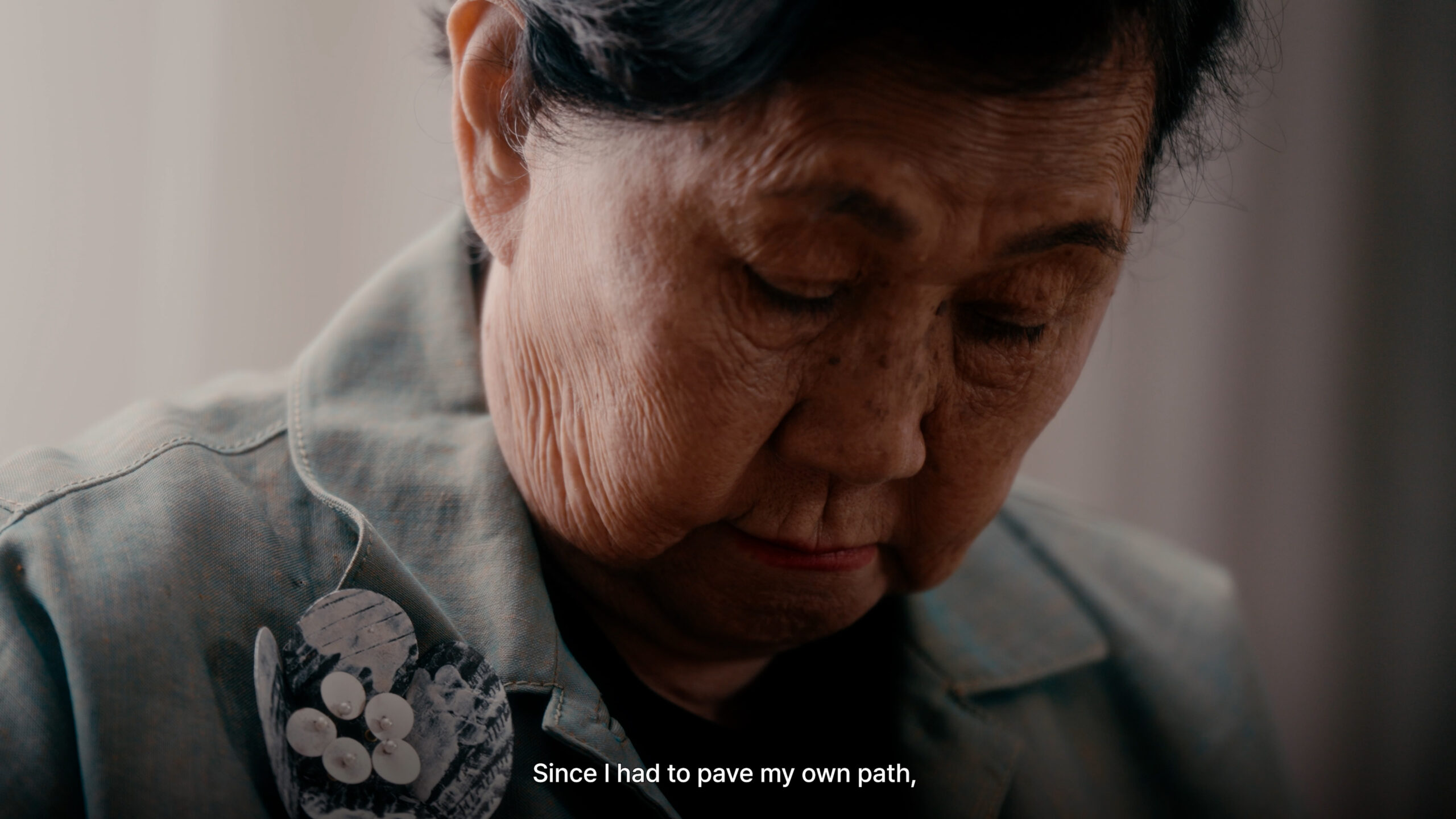
Lee ShinJa: When I first began tapestry, there was no one to guide me. Since I had to pave my own path, I ventured down different routes, however I wanted. I was my own person.

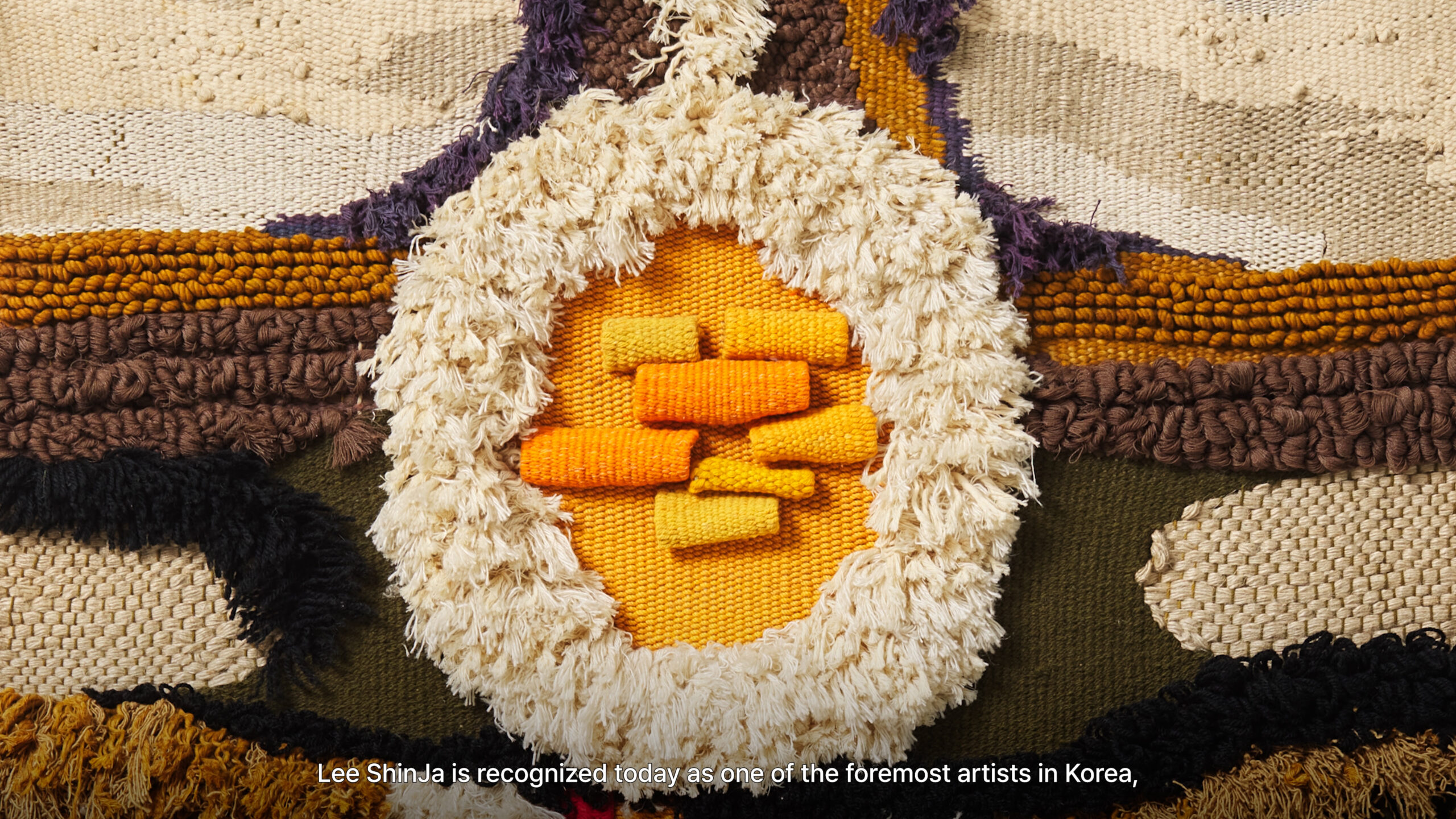
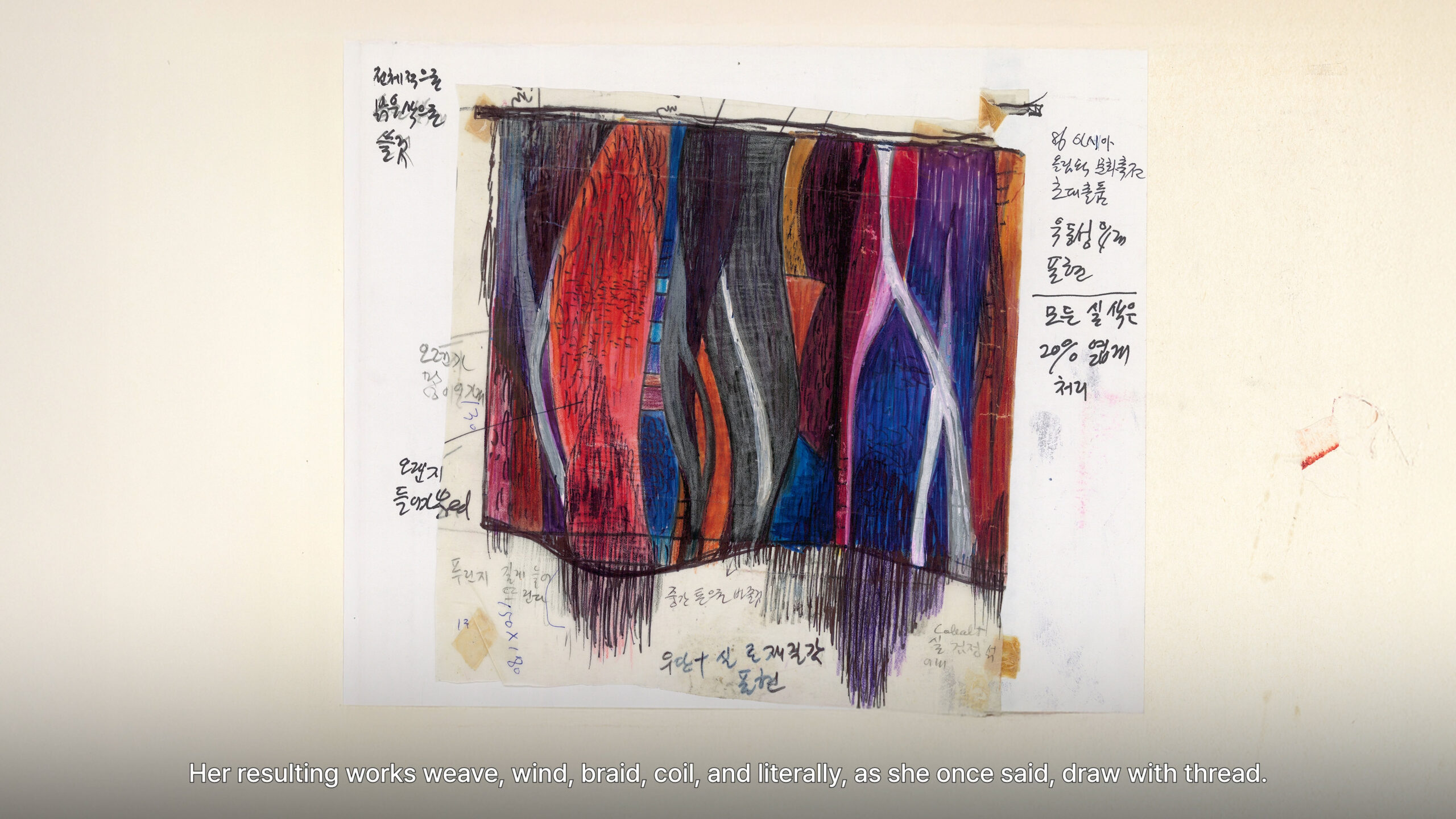
Victoria Sung: Lee ShinJa is recognized today as one of the foremost artists in Korea, who forged new pathways for the expressive possibilities of fiber. Using materials and techniques that were widely dismissed as forms of feminine domestic labor, Lee broke with tradition to create bold sculptural works that defined craft as art. Her resulting works weave, wind, braid, coil, and literally, as she once said, draw with thread. And it is through her visionary practice that the Korean art world was first introduced to tapestry as a contemporary art form.

이신자: 이게 국립현대미술관에 있으니까

이단지: 얘가 이거 샘플이예요?

이신자: 응

이단지: 중간에 바뀌었구나

이신자: 얘는 슬릿을 더 펠트를… 효과를 어떤가 해서 먼저 짜보고 설치하기에 따라서 여러 가지 표현이 달라지지 위에서부터 밑에까지 됐잖아, 반을 이렇게 접으면 이렇게 나오니까

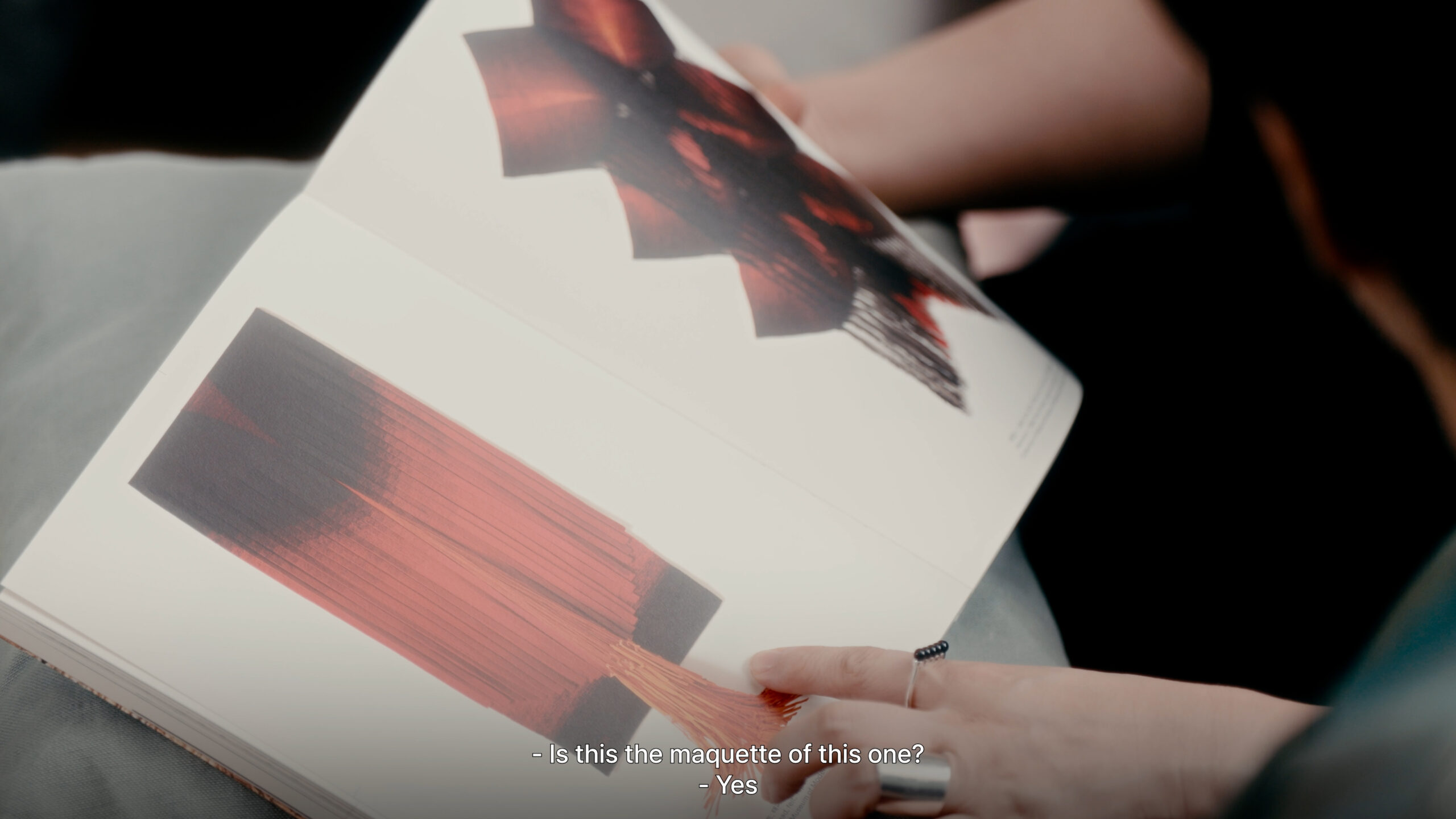
Lee ShinJa: This work is part of the MMCA (National Museum of Modern and Contemporary Art) collection.

Lee Danji: Is this the maquette of this one?

Lee ShinJa: Yes

Lee Danji: Looks like something changed in the process.

Lee ShinJa: Here, we see more felt slits I wove this to see how it comes along. Depending on how you install it, the expression changes. It goes from top to bottom like this. You fold this in half, and there, you see it.

이단지: 선생님, 선생님이 50학번이시잖아요. 50년에 대학교 가신 거죠?

이신자: 어. 서울대 50학번이야

이단지: 서울대

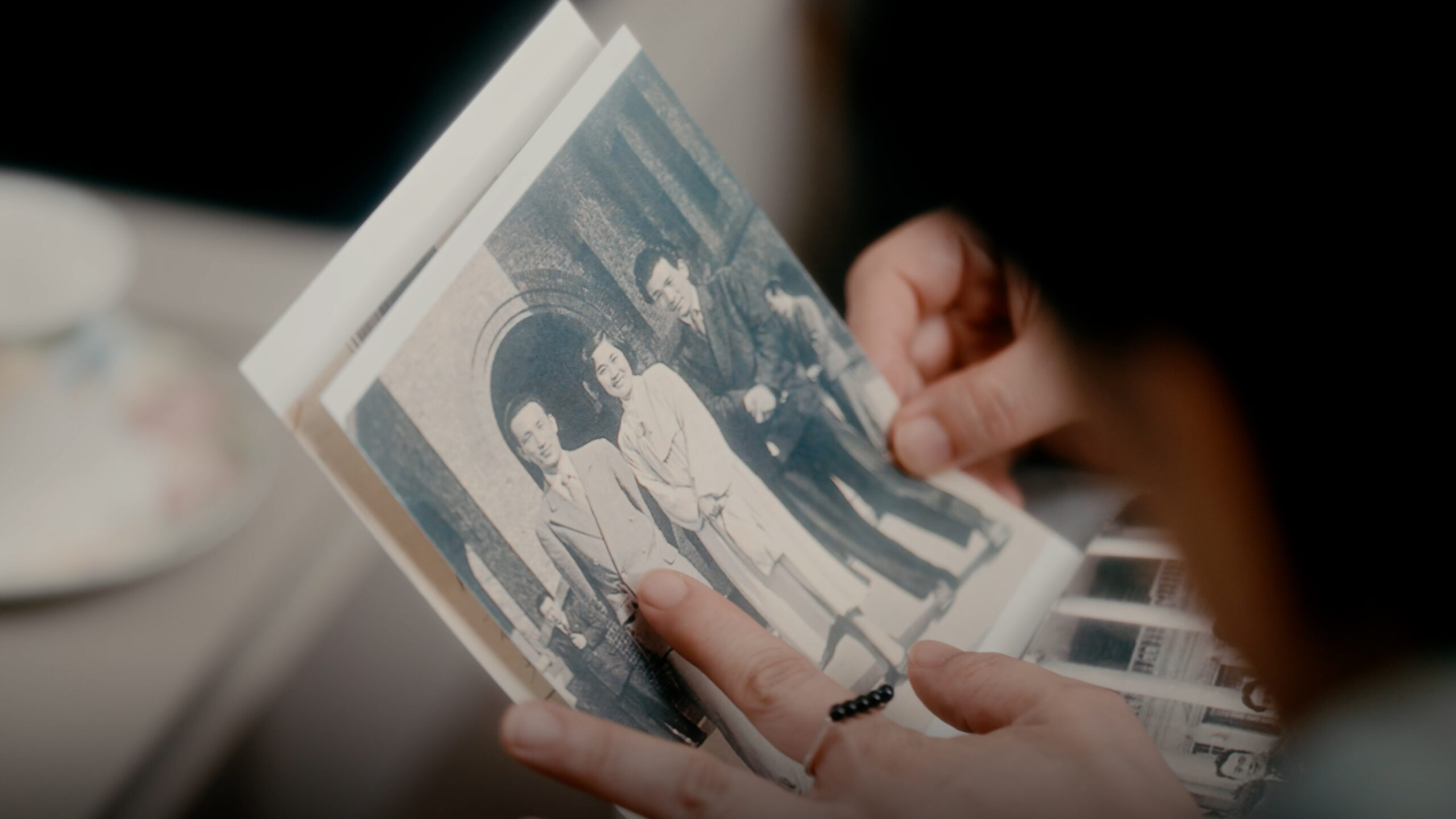
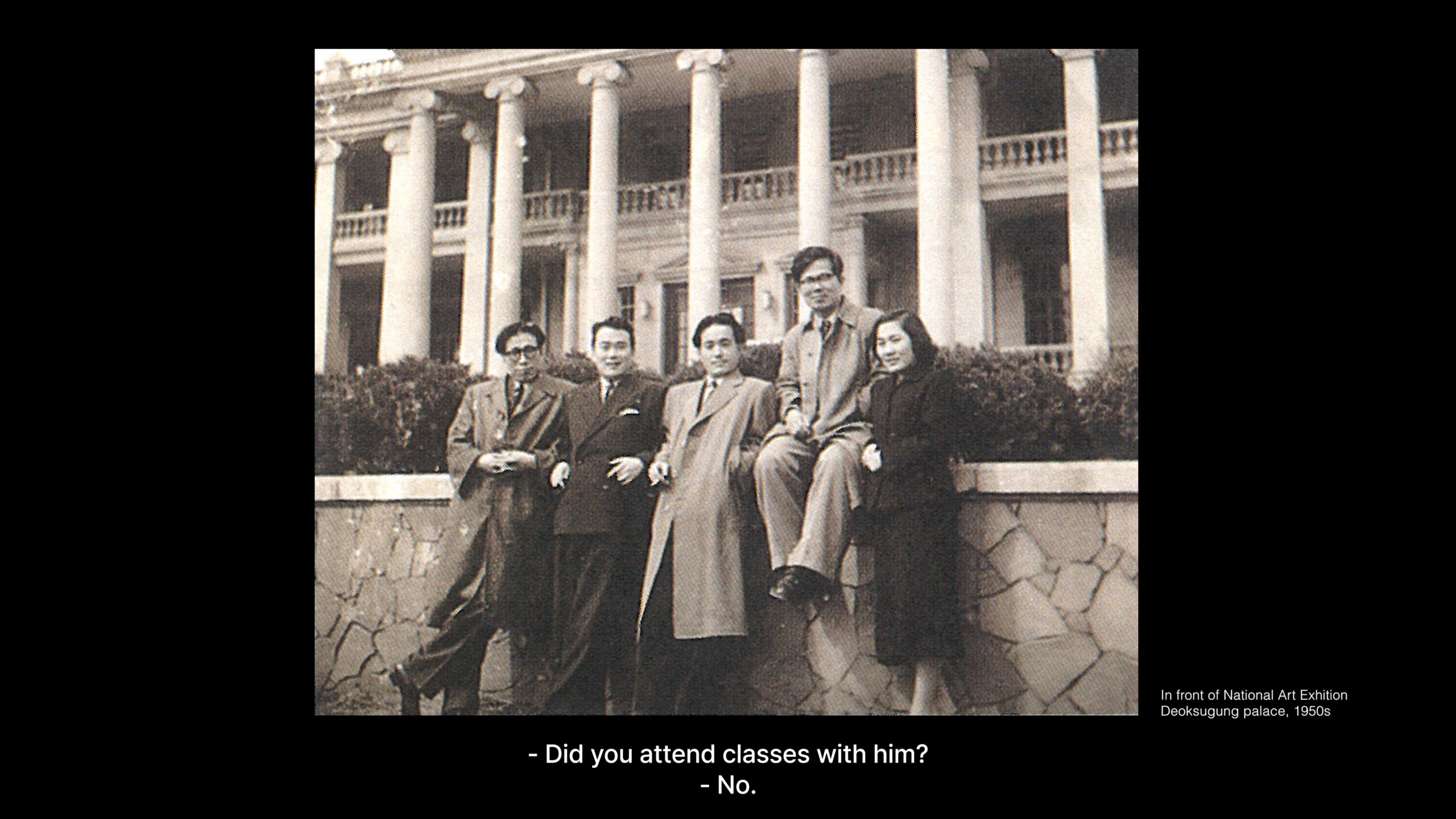
이신자: 6.25 사변때, 이거는 덕수궁 쪽일 거야. 장운상 선생님

이단지: 장운상 선생님은 수업 같이 들으셨었어요?

이신자: 없었어, 후에 내가 들어갔으니까

Lee Danji: You are Class of ’50, meaning you entered the university in 1950, right?

Lee ShinJa: Yes. Seoul National University Class of 1950. When the Korean war broke out. This must be at the Deoksugung Palace. That’s Jang Woonsang.

Lee Danji: Did you attend classes with him?

Lee ShinJa: No. our years barely overlapped.

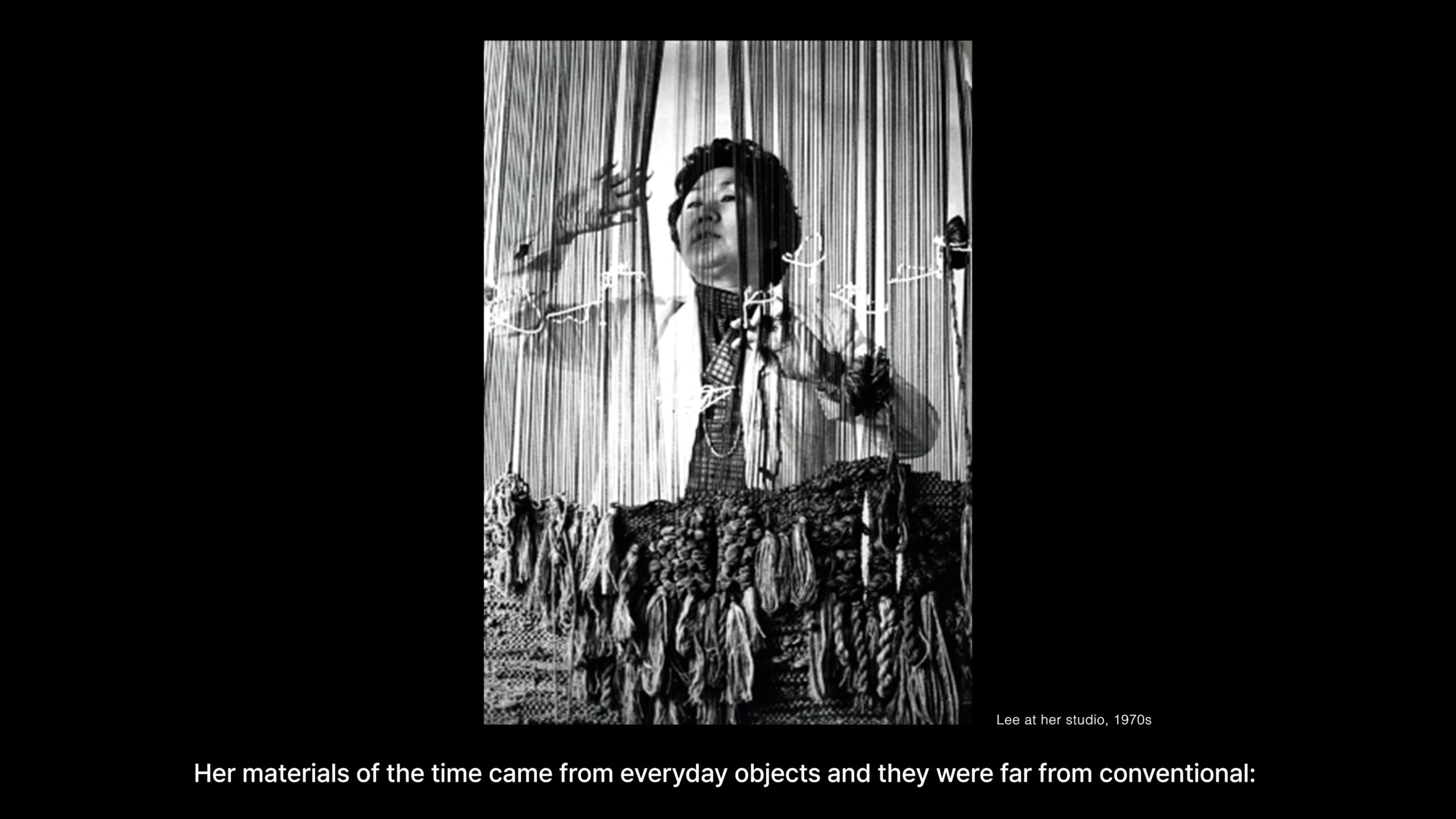
장운산: 어머니께서는 1930년 경북 울진에서 태어나 서울대학교 미술대학 응용미술과를 졸업한 후 홍익대학교 산업미술대학원에서 직물디자인을 전공하셨어요. 어머니께서 섬유예술을 시작하던 시기는 한국전쟁의 상흔이 채 가시지 않은 1955년 즈음이죠. 당시 부산으로 피난 내려간 뒤 국제시장에 가서 구제품을 구입해 실을 풀어 작업을 하셨죠. 구호품 스웨터를 풀어 쓰거나 침구용 실을 사서 염색하고 합사하여 사용하기도 했으며 낚싯줄, 밀포대, 방충망, 은박지, 잡지 등 일상생활에서 쉽게 구할 수 있는 평범하고 특이한 재료들을 작품에 활용하셨어요.

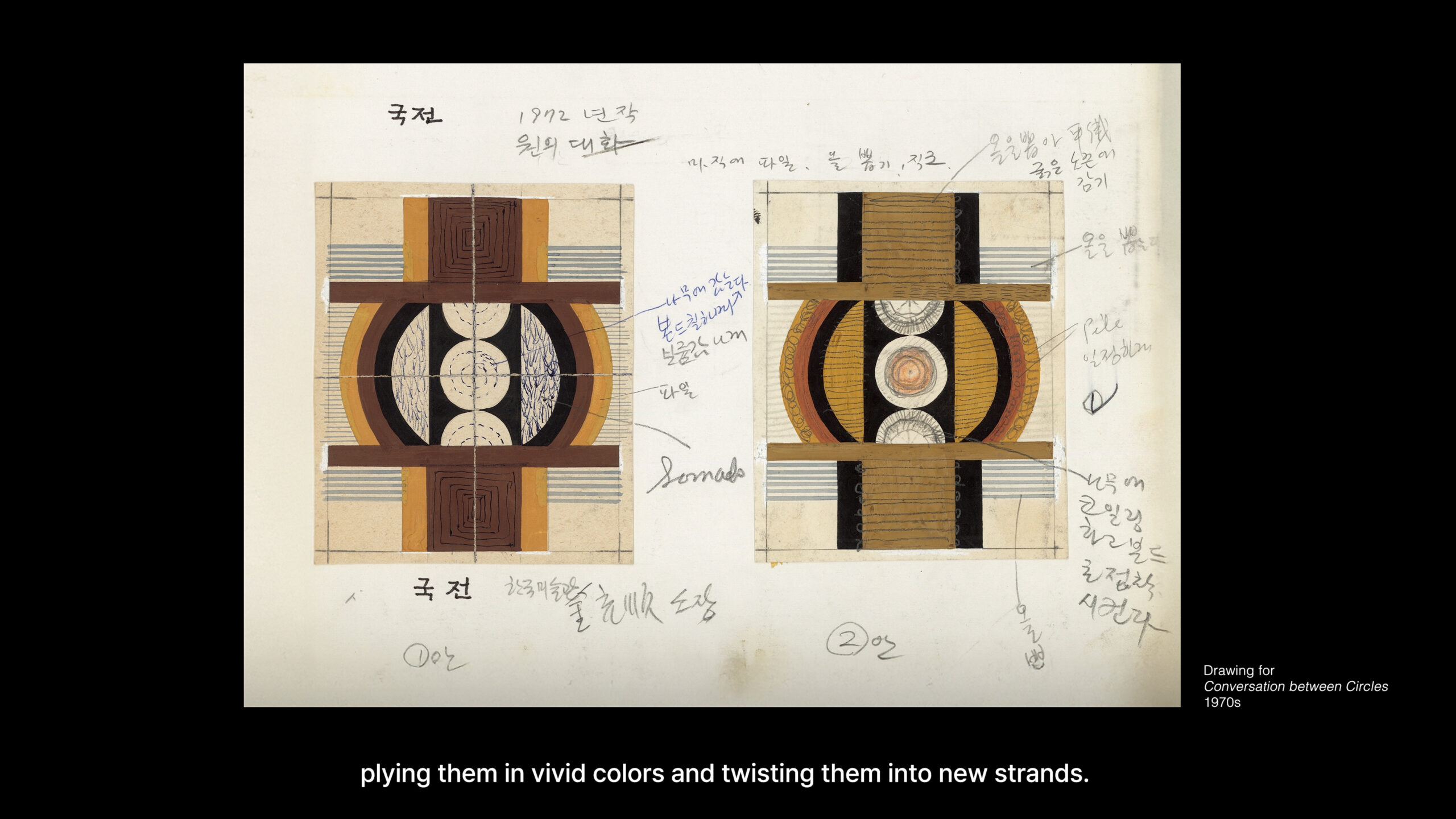
Sang Gon Jang: My mother was born in 1930 in a small town on Korea’s east coast called Uljin. She studied Applied Arts at Seoul National University, and later earned a master’s degree in textile design from Hongik University. She began working with fiber around mid-1950’s, at a time when the scars of the Korean War were still running deep. Her family took refuge in the interim capital, Busan during the war. She would go to Gukje Market to buy second hand clothes and fabrics, often unravelling them to use in her work. She also used yarns originally made for bedding -plying them in vivid colors and twisting them into new strands. Her materials of the time came from everyday objects and they were far from conventional: Fishing line, burlap sacks, mosquito nets, foil, even old magazines.

이단지: 선생님 그때 이 작업들로 이게 국전에서 상 받으신 작업이라고 알았어요. 근데 그때는 이렇게 추상처럼, 기하학처럼 안 했잖아요, 다른 사람들은…

이신자: 내가 많이 했지, 전통문양만 많이 했으니까, 다른 사람은 그저 옛날에 남의 그림 받아서 명주실로 수놓을 때거든 나는 그런 거 안 했으니까, 내가 하고 싶은 대로 이런 게 나온 거지. 선생이 없었으니까 혼자 했기 때문에 지가 하고 싶은 대로 했지, 천을 (가지고) 있는게 없었으니까, 하는 사람이 없으니까…내가 혼자 만들어서 한 것이 그게 다 재료야. 그러다 보면 또 다른 새로운 작업들이 생겨”

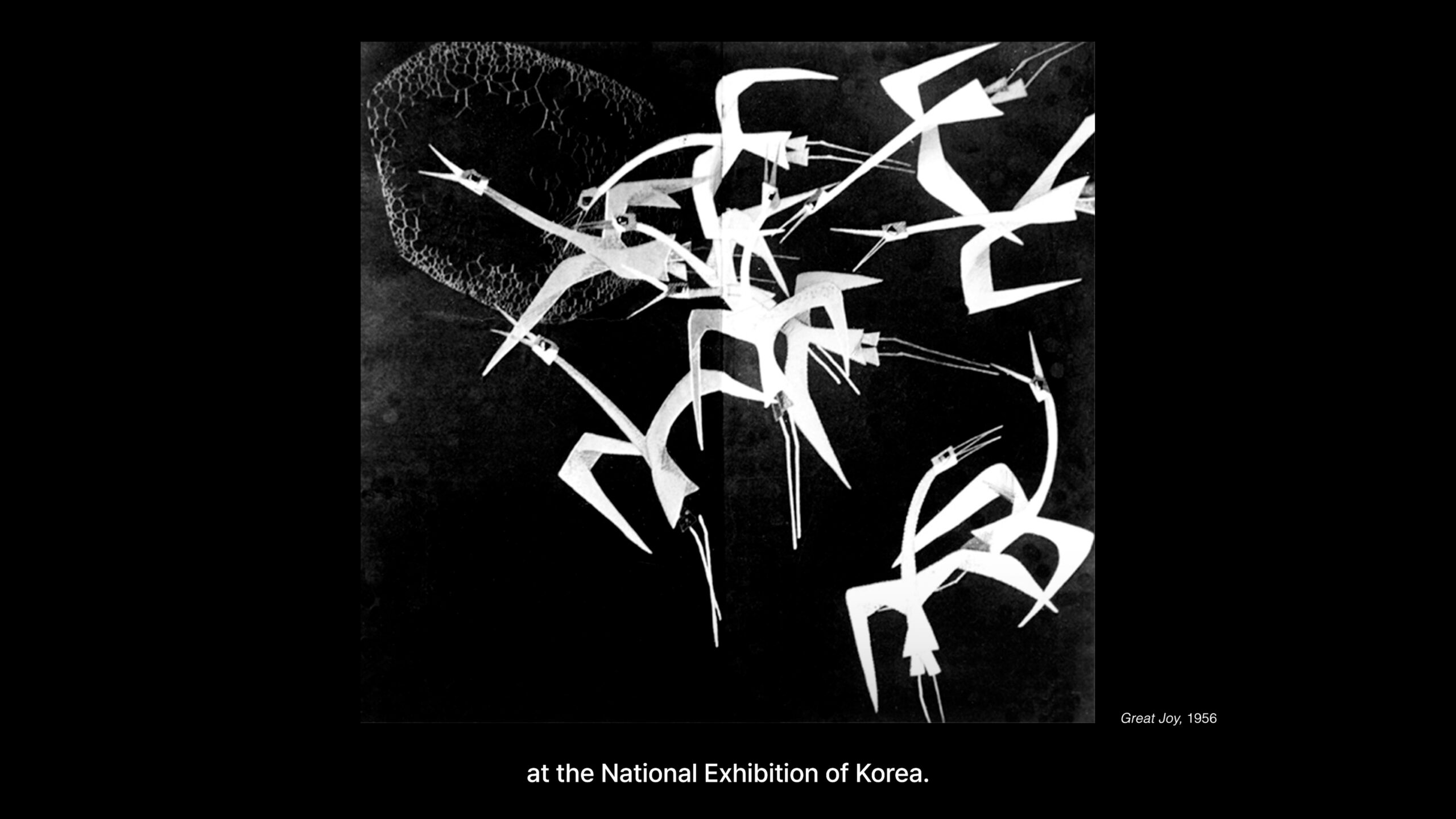
Lee Danji: These works won awards at the National Exhibition of Korea.

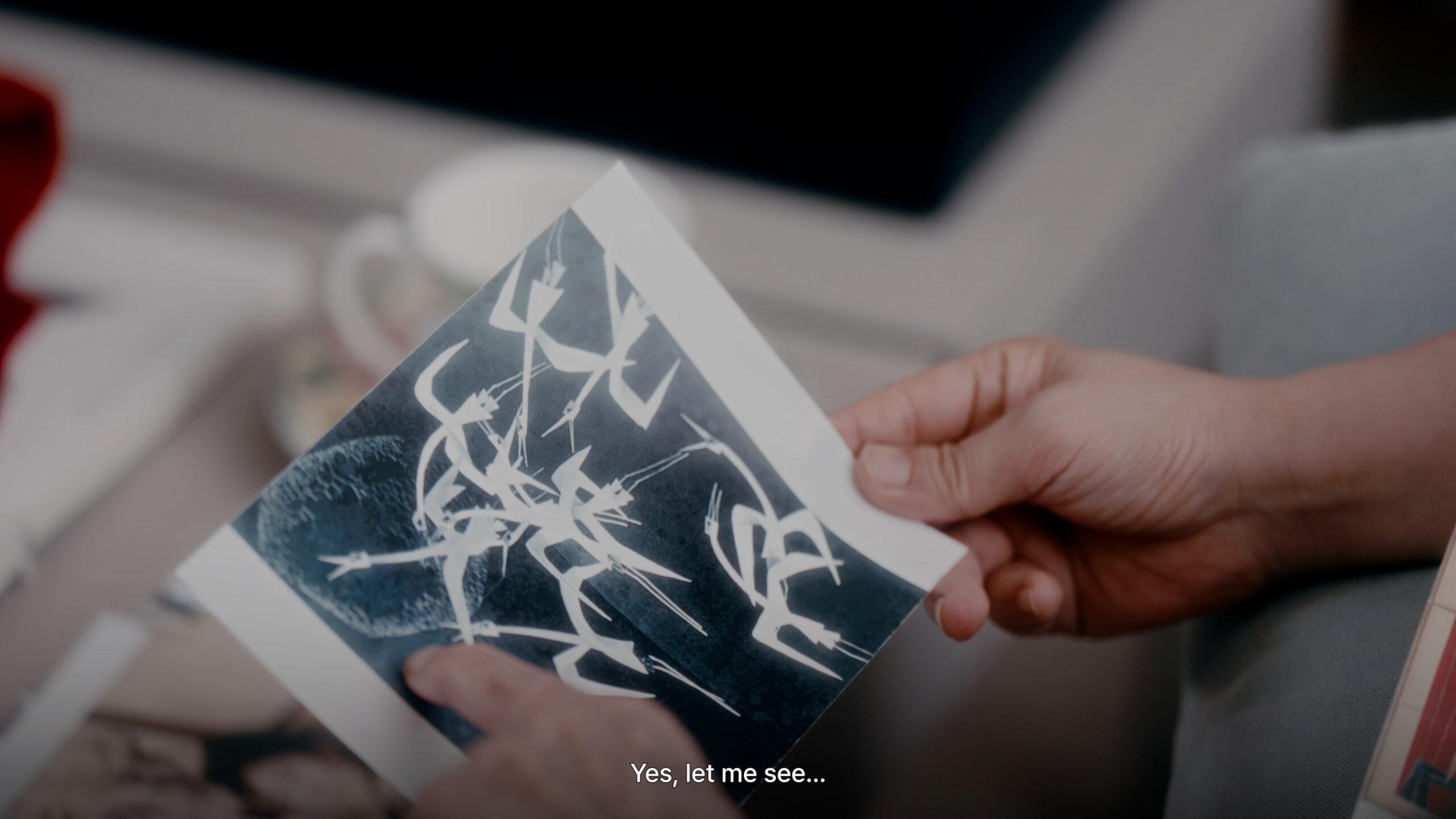
Lee ShinJa: Yes, let me see…There’s the moon. and cranes. The cranes … going around the sun or moon.

Lee Danji: But back then, others didn’t make abstract, geometrical embroidery like this.

Lee ShinJa: It was just me. They only made traditional patternss. At the time, it was common to get embroidery designs from others and stitch it with silk threads. That didn’t interest me, so instead I made whatever struck me at the time. No one had shown me the way, so I became my own compass. There weren’t even right fabrics that I could work with—because no one needed them. Whatever I found and made became my materials. And along the way, new works would just unveil themselves.”

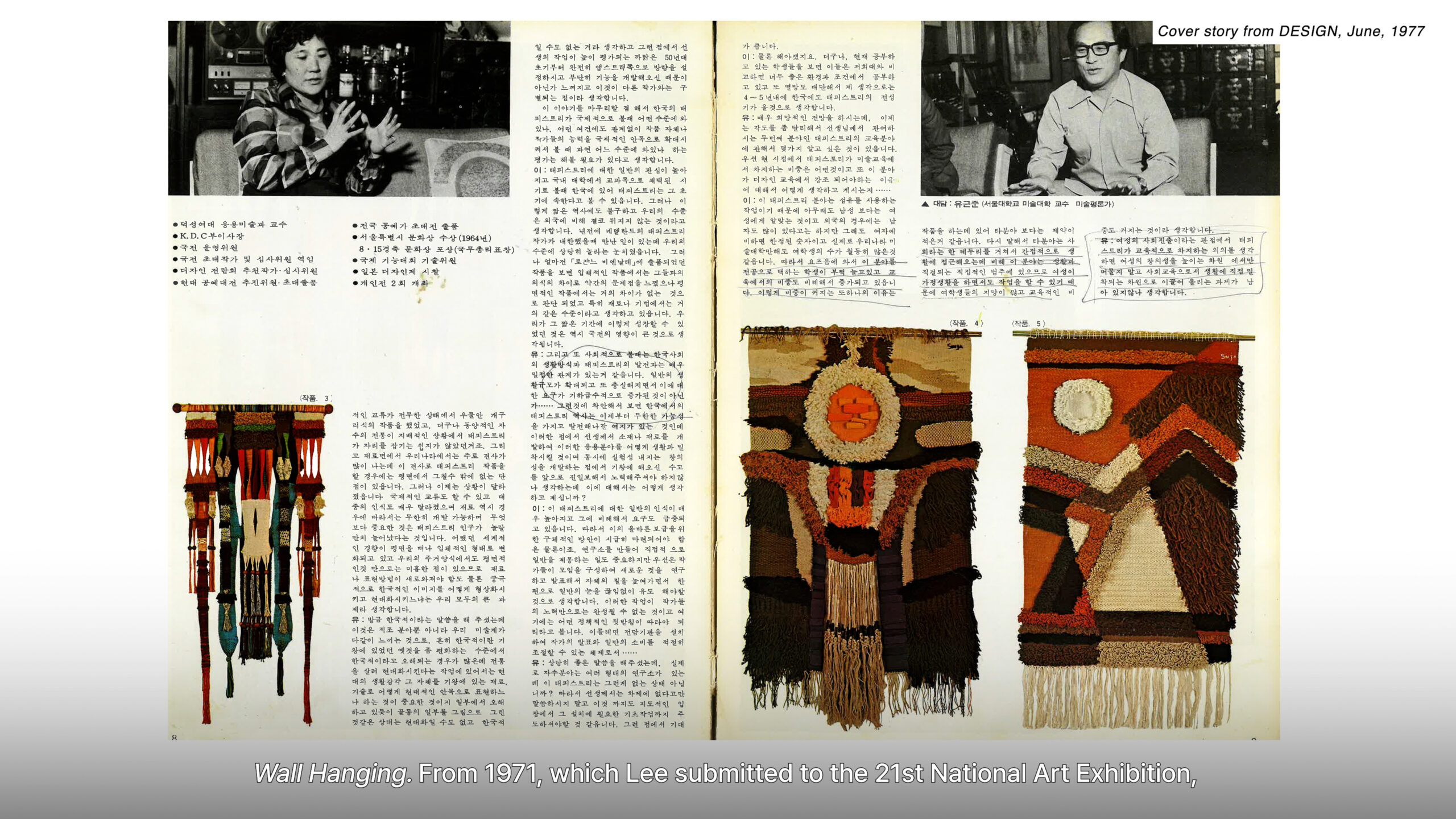
Victoria Sung: Wall Hanging. From 1971, which Lee submitted to the 21st National Art Exhibition, is considered the first work of contemporary tapestry to be introduced in Korea. The work broke away from the medium’s traditionally flat surface, bringing in texture, shape, and dimensionality to her composition. Drawing inspiration from childhood memories of her grandmother’s loom and straw craft, she built a makeshift loom of her own using a wooden frame, and through repeated trial and error, developed her own weaving techniques.

이신자: 지 멋대로 한거니까,발가락으로 한거냐 그랬어. 곱지않고, 여러가지 기법으로, 있는 형태가 아니고 만들어서, 지 멋대로 만들었다고…대한민국 자수 다 망쳤다고

이단지: 너무 속상하셨겠어요?

이신자: 속상할 것도 없어. 누구 하는 사람이 없었으니까

장운산: 작가는 작가일 뿐

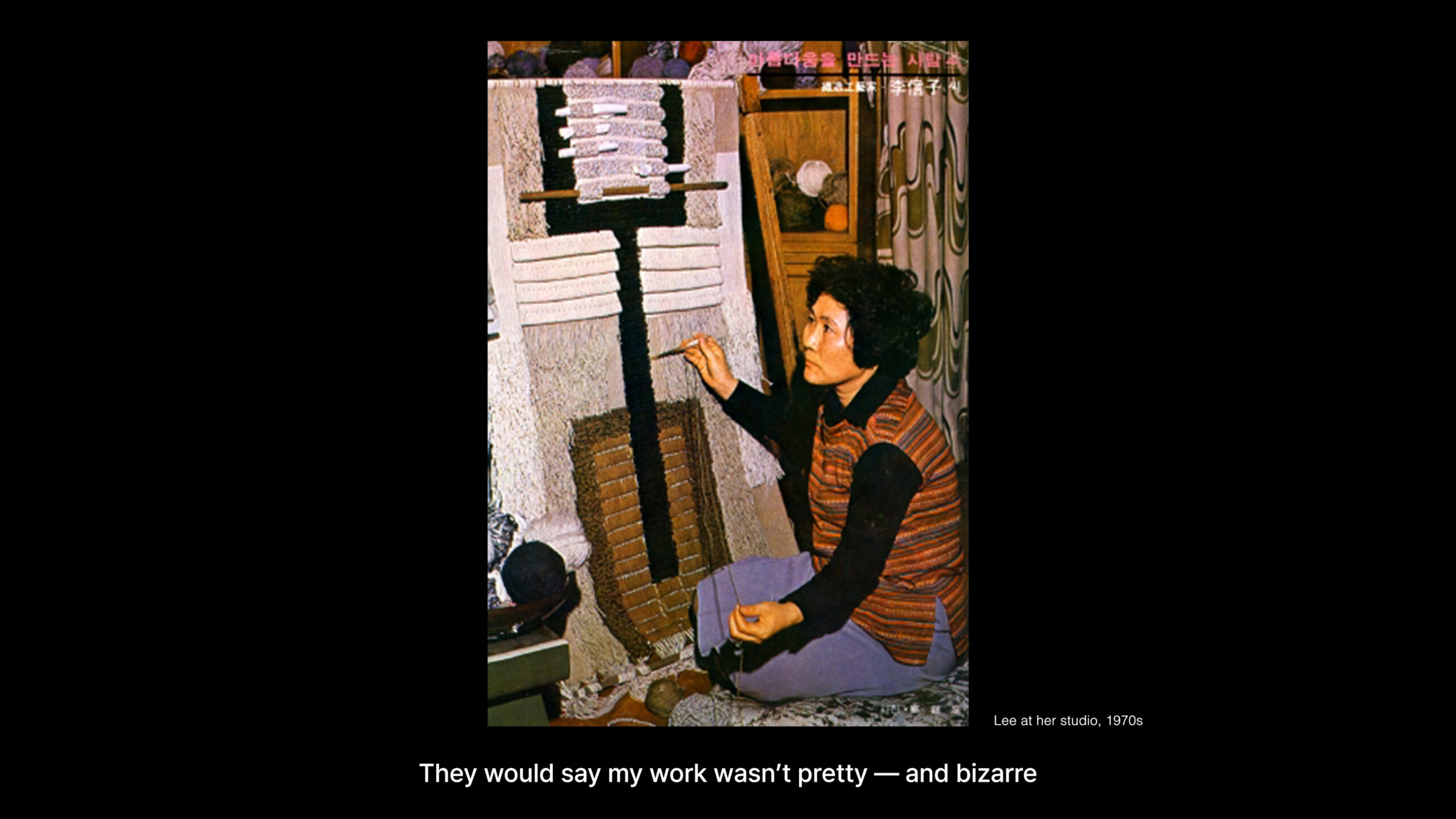
Lee ShinJa: Since they had never seen anything like it, people often said she wove it with her feet. They would say my work wasn’t pretty — and bizarre because I used new, self-created techniques with no rules. They said I had ruined Korean embroidery’s tradition.

Lee Danji: That must’ve been really upsetting.

Lee ShinJa: I coudn’t have cared less. Because no one would walk the walk.

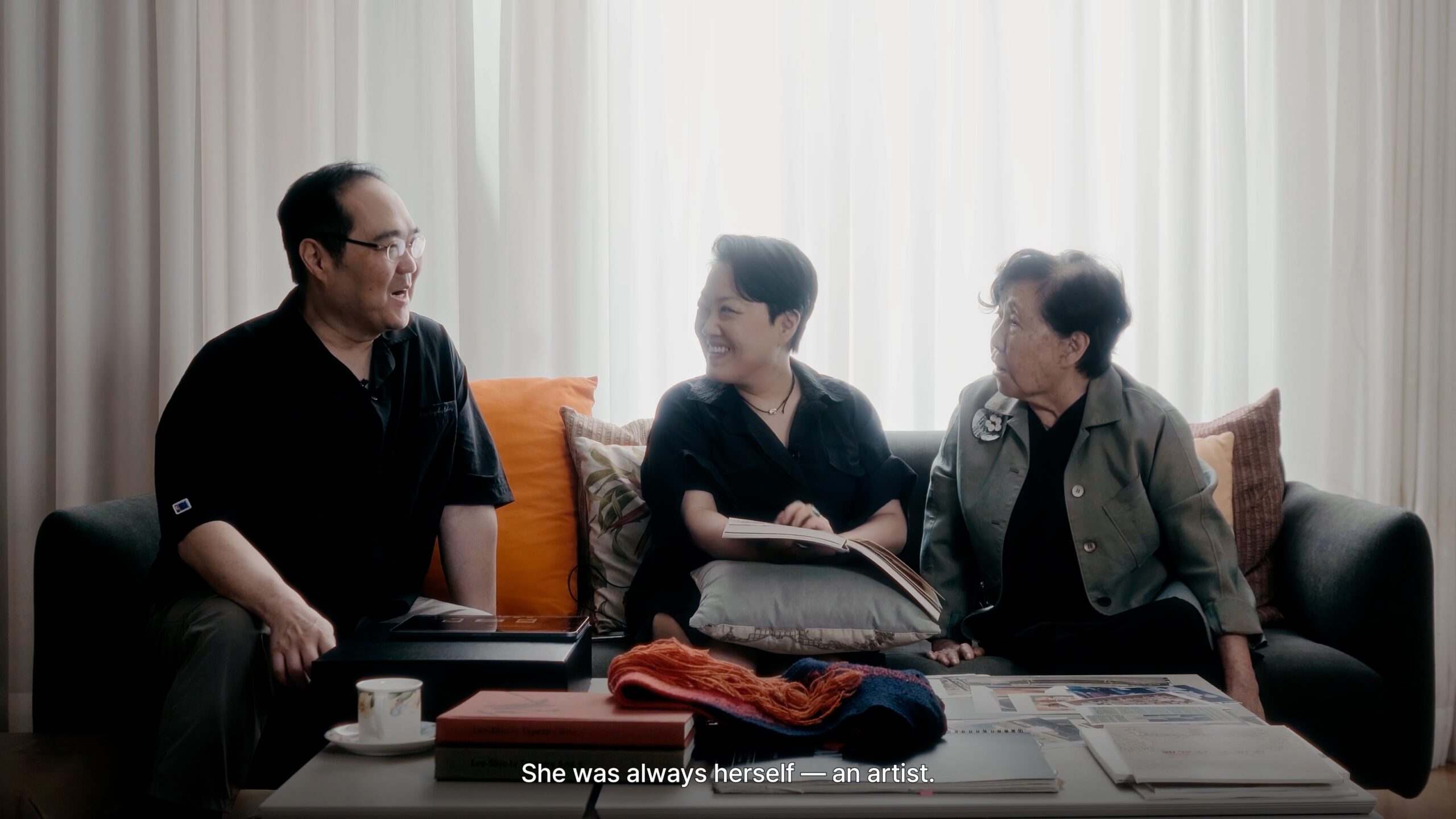
Sang Gon Jang: She was always herself — an artist.

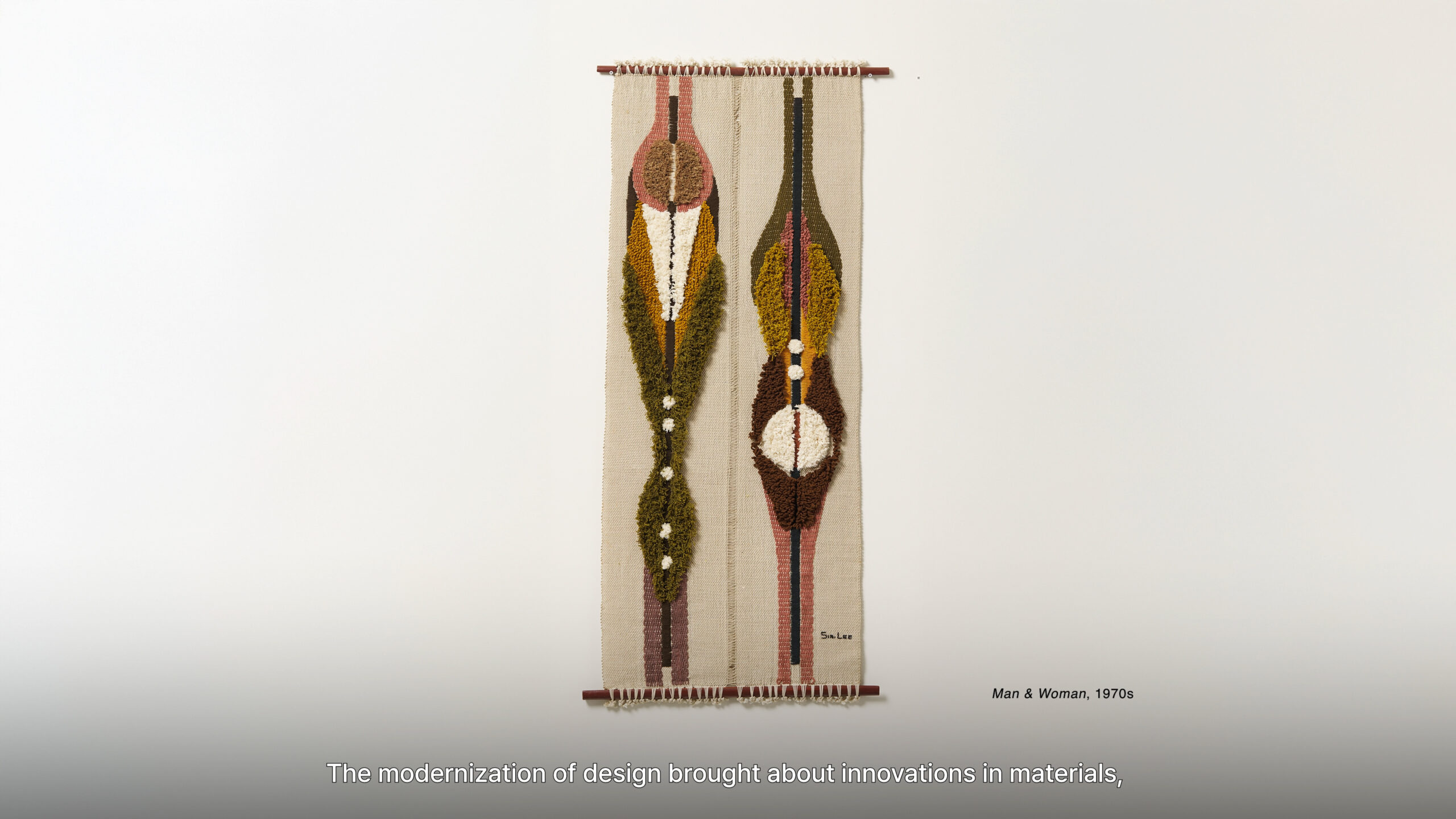
Victoria Sung: The 1970s in Korea were marked by rapid industrialization and economic change. The modernization of design brought about innovations in materials, and Lee incorporated cutting-edge synthetic fibers into her artworks alongside more natural materials like wool, hemp, cotton, and silk.

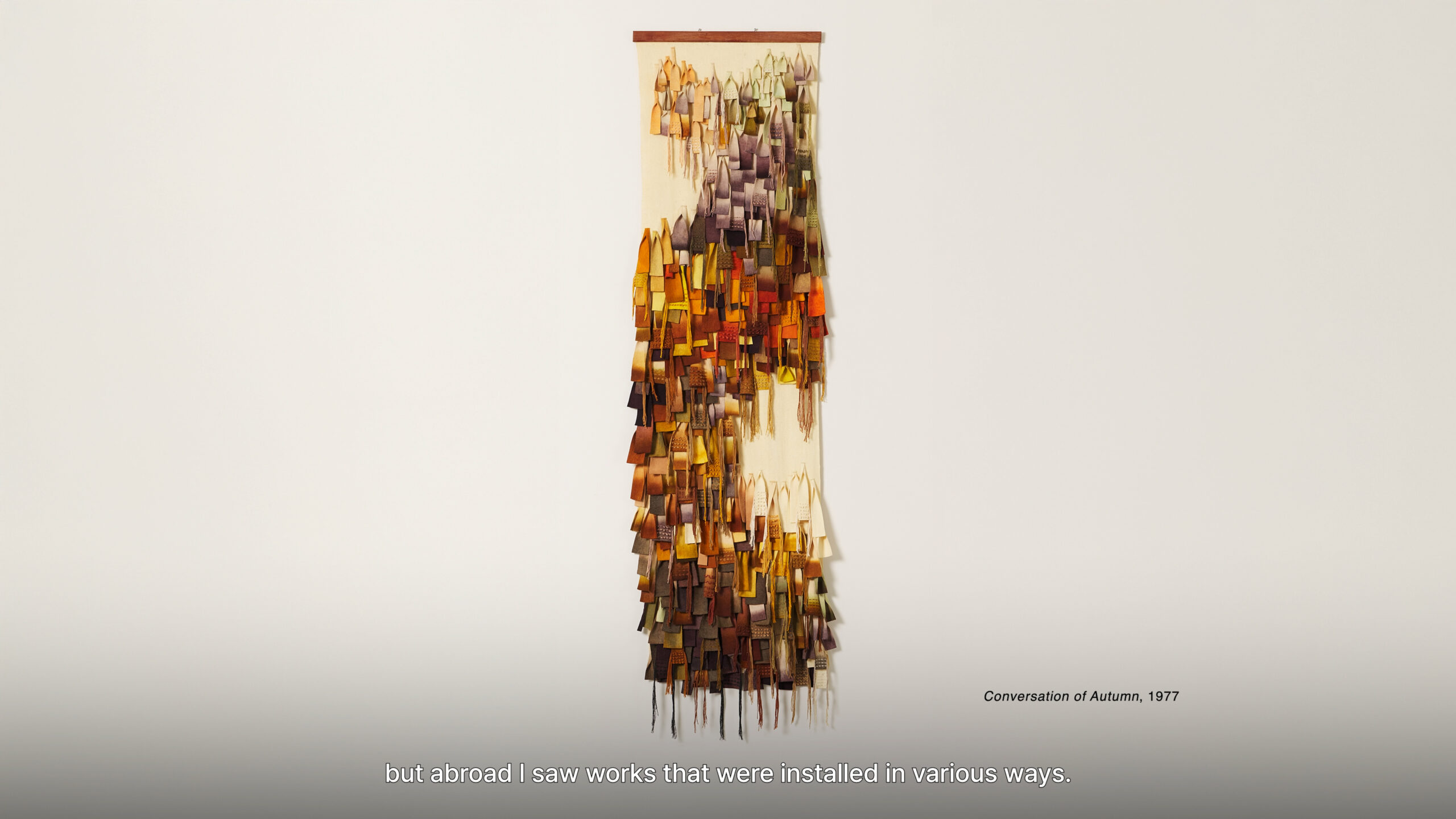
이신자: 70년대 (해외)여행을 시작할 때 (해외)나가서 보니까 전혀 다른 것들이 많아서 우리도 좀 현대적으로 해보자 해서 이렇게 만드는 거예요. 이런 거… 다 요만한 거 요런 거로 했지. 외국 가서 보니까 우리하고는 너무 다른 표현이기 때문에 우리도 이런 거 좀 해야 되겠다, 벽에다 걸려면 안 그러면 액자 끼워서, 이렇게 벽에다 거는 것밖에 없잖아. 외국 가서 보니까 다양한 게 많더라고. 그래서 우리도 좀 바꿔보자 그래갖고는 구라파도 어쩌다가 가면 많이 변했지.

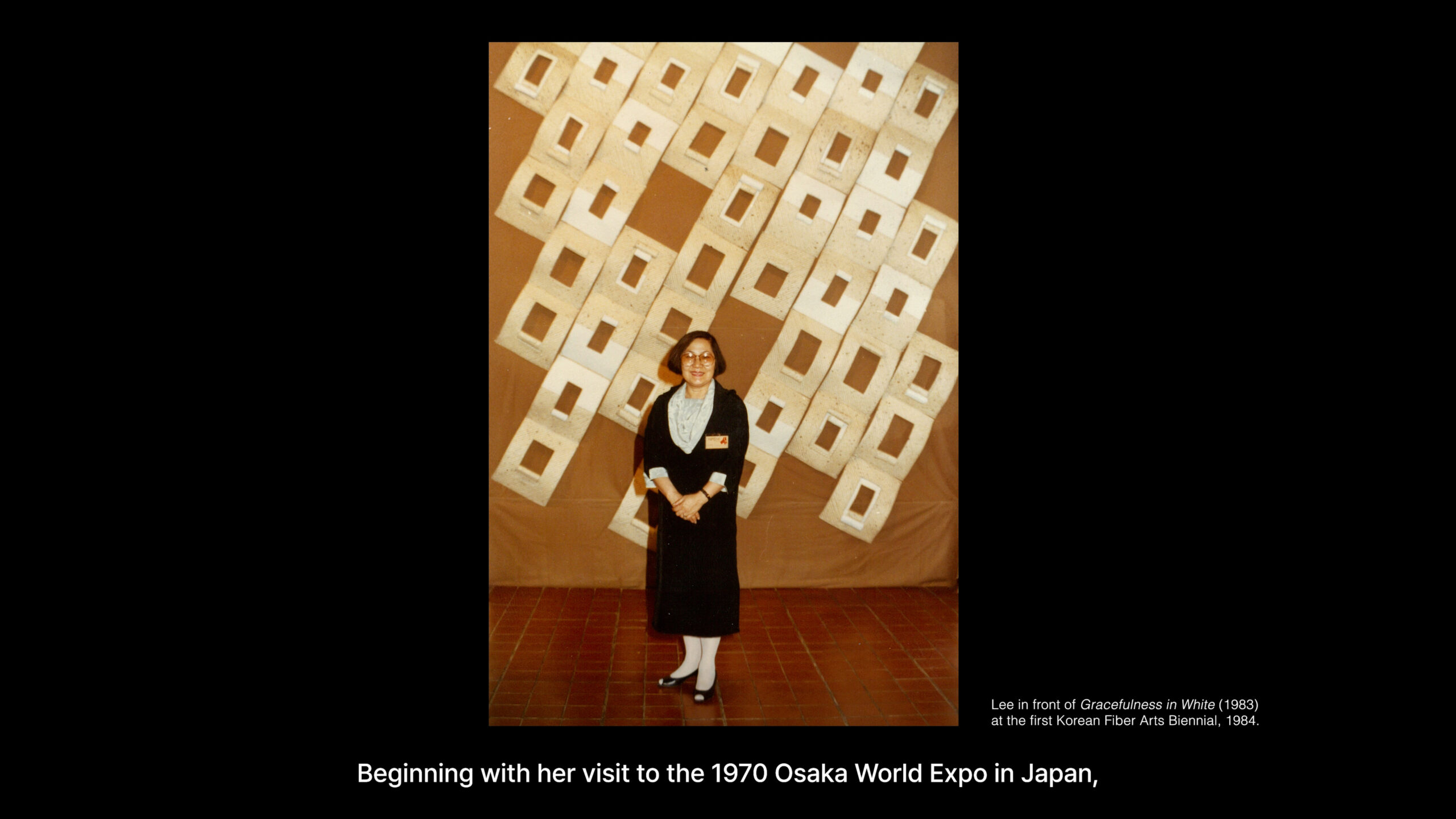
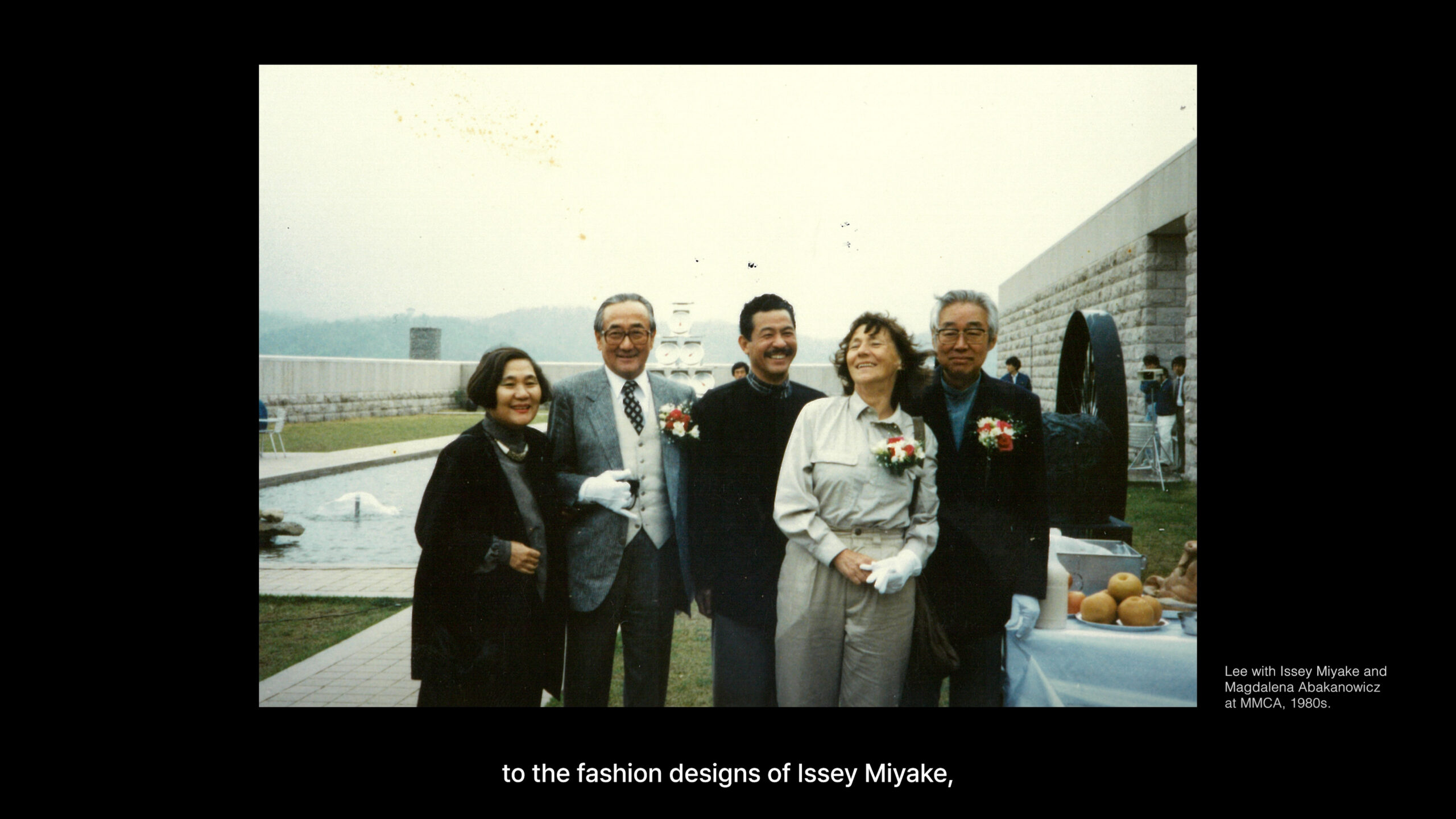
Lee ShinJa: The 1970s in Korea were marked by rapid industrialization and economic change. The modernization of design brought about innovations in materials, and Lee incorporated cutting-edge synthetic fibers into her artworks alongside more natural materials like wool, hemp, cotton, and silk. Weaving together these different fibers in high relief, she began to transform her tapestries into soft sculptures that could be seen in the round. Beginning with her visit to the 1970 Osaka World Expo in Japan, Lee went on to attend the 1983 Internation Tapestry Biennial in Lausanne, Switzerland, among other international exhibitions. Through these travels, she became deeply Inspired by the evolving field of contemporary fiber art, from seeing the works of contemporaries. like Magdalena Abakanowicz and Sheila Hicks to the fashion designs of Issey Miyake, she was particularly interested in the expansion of fiber into sculptural and installation-based practices.

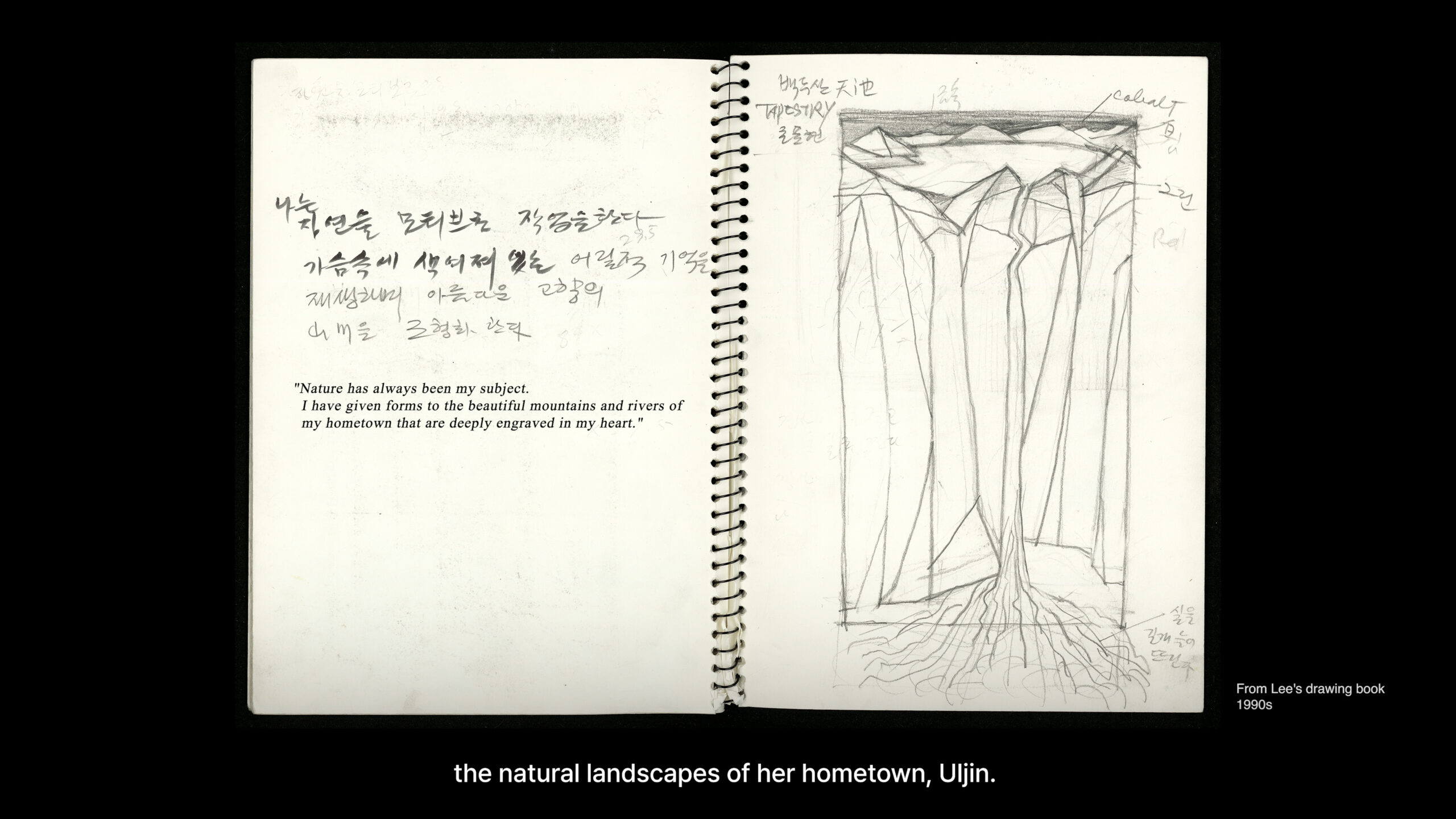
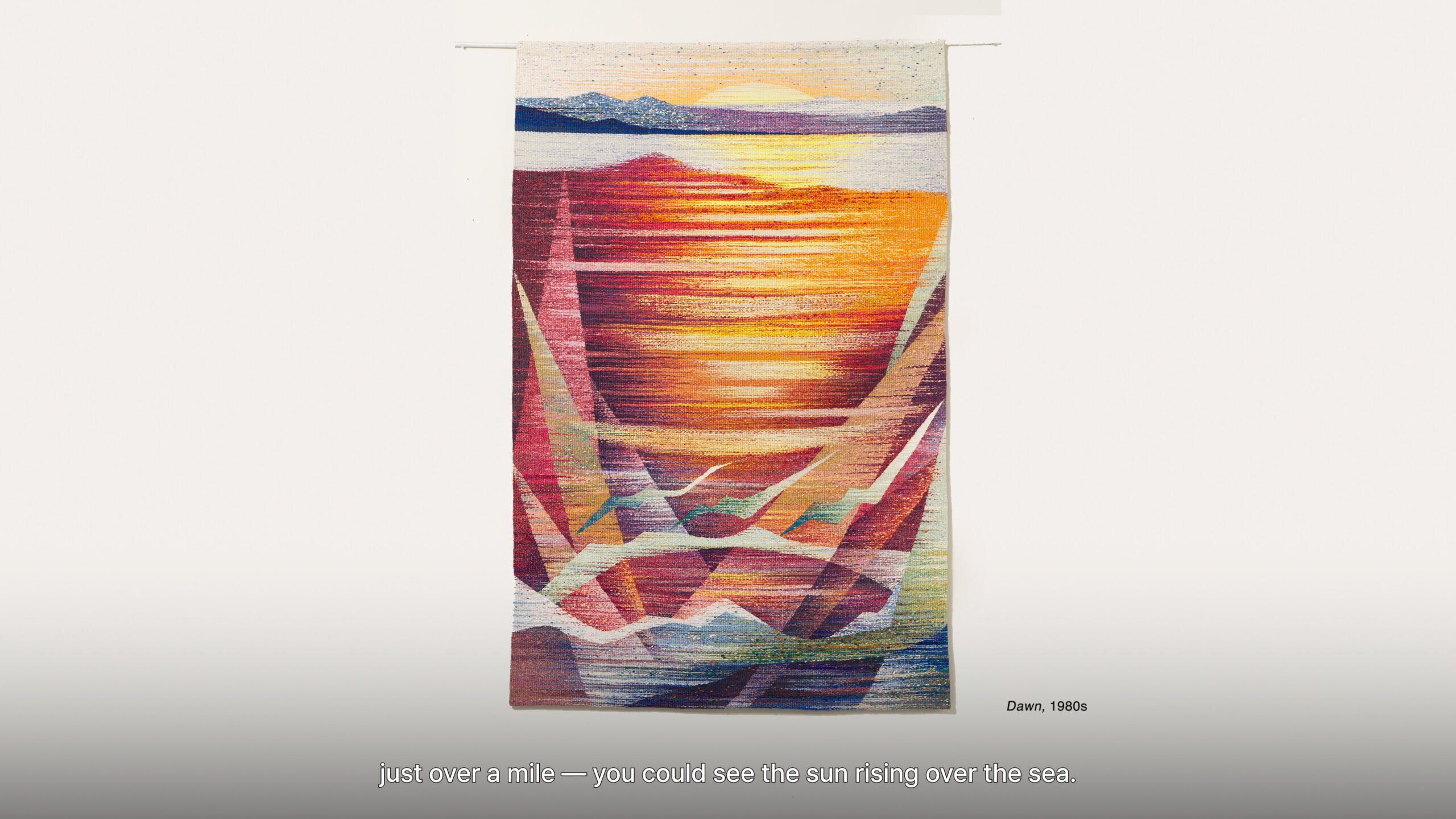
Victoria Sung: TLee has long expressed her desire to capture the natural landscapes of her hometown, Uljin. Along with the mountainscapes of her youth, she has likened the bright colors to the intensity of sunlight reflected off the coast during sunrise and sunset.

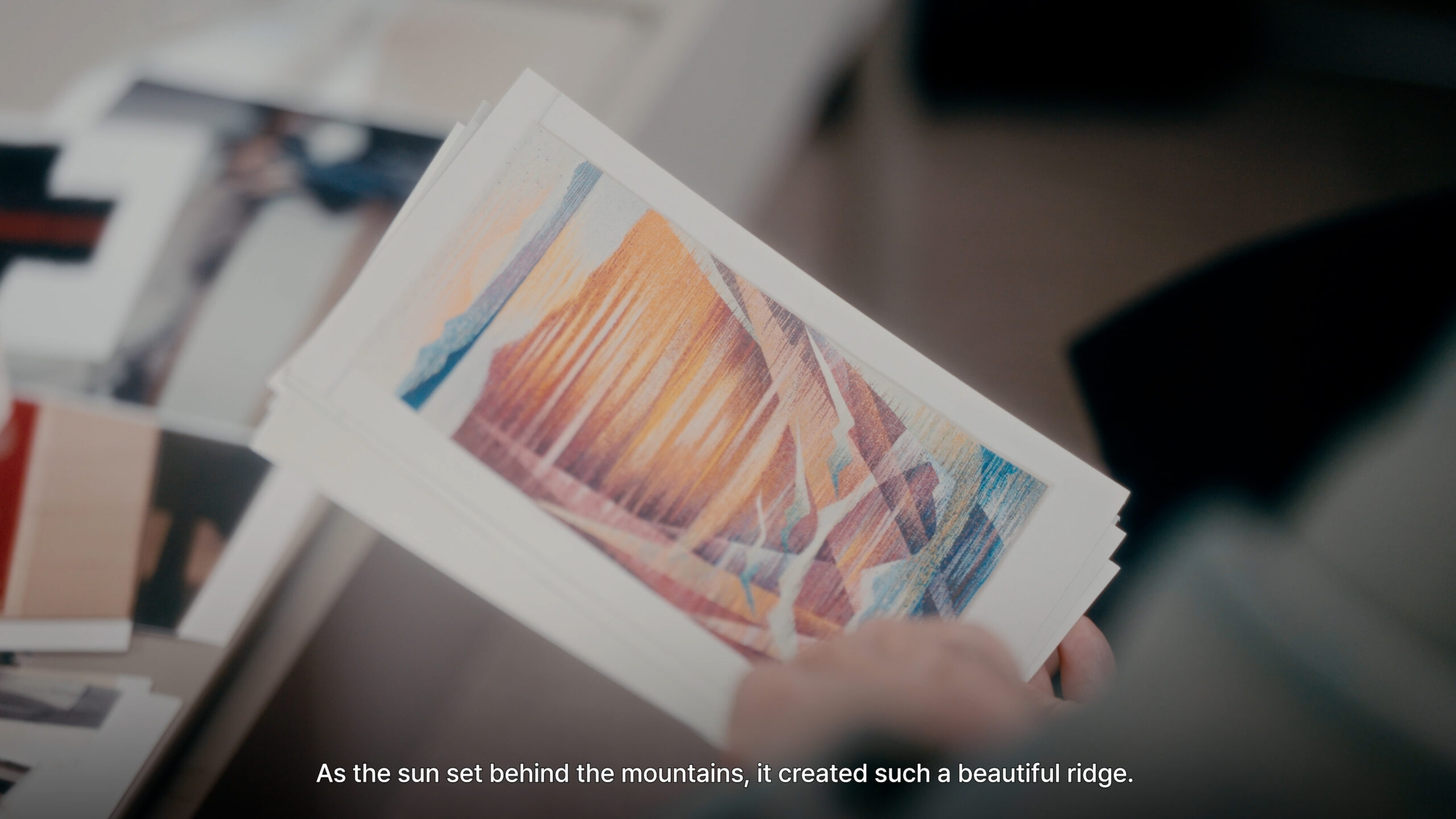
이신자: 봄에 해가 뜨는 게 그렇게 아름다웠어. 바다가 좀 걸어가면 한 오리 걸어가면 바다가 보이는데 해가 뜨는 게 보였거든. 그때 아름다웠으니까, 아, 예쁘다… 그래서 기록에 남겼는데 해가 넘어가면서 이렇게 아름다운 능선을 만들었다, 이렇게 해서 해본거지.

Lee ShinJa: The sunrise in spring was magnificent. If you walked just a little — just over a mile — you could see the sun rising over the sea. It was so breathtaking, I thought, “Ah, how beautiful… so I captured it through my work. As the sun set behind the mountains, it created such a beautiful ridge.

Victoria Sung: Beginning with her visit to the 1970 Osaka World Expo in Japan, Lee went on to attend the 1983 Internation Tapestry Biennial in Lausanne, Switzerland, among other international exhibitions. Through these travels, she became deeply Inspired by the evolving field of contemporary fiber art, from seeing the works of contemporaries like Magdalena Abakanowicz and Sheila Hicks to the fashion designs of Issey Miyake, she was particularly interested in the expansion of fiber into sculptural and installation-based practices. From the late 1980’s’ onward, she devoted herself fully to tapestry, expanding the scale of her weavings to, at times, massive proportions.

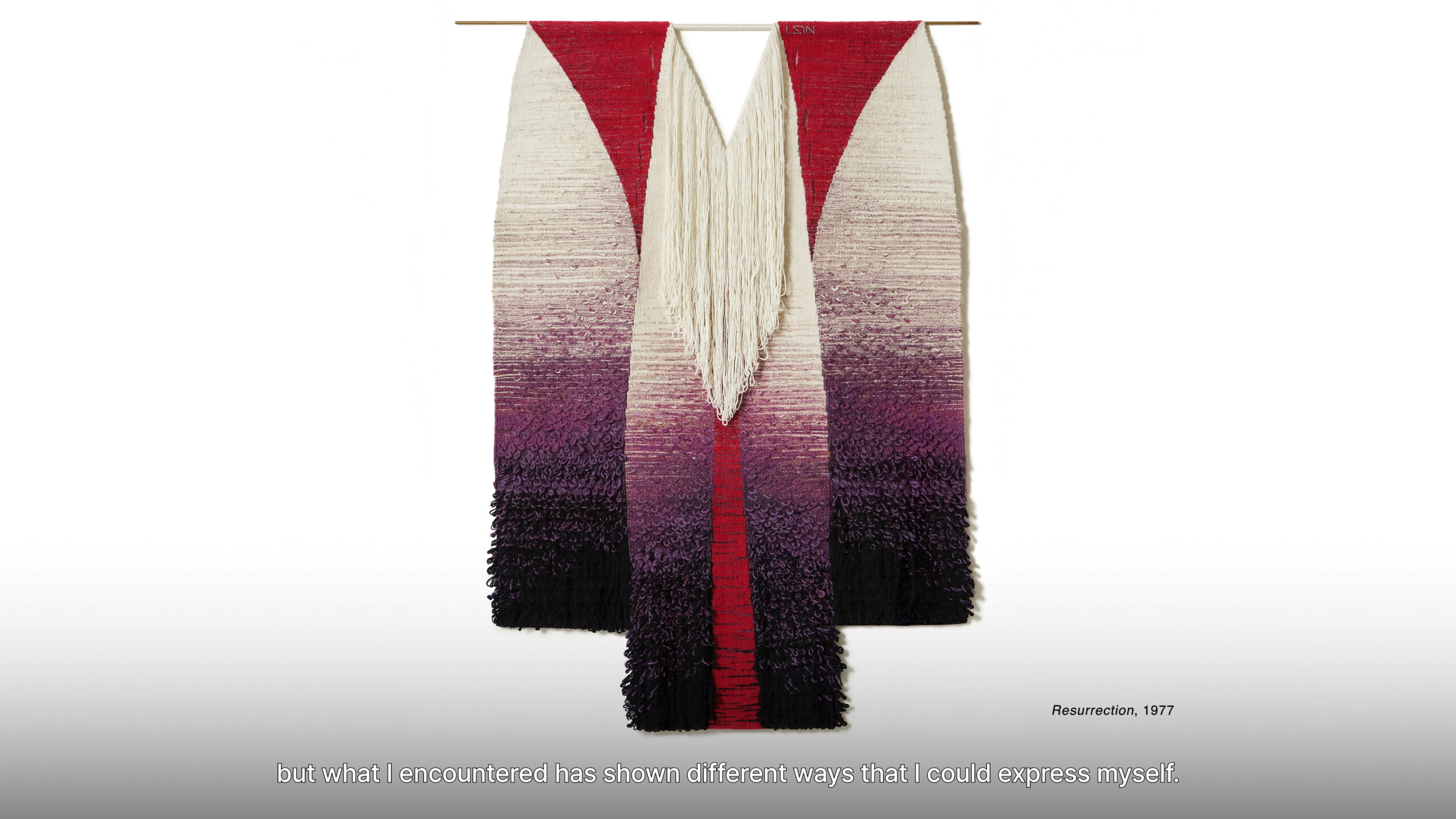
Victoria Sung: Works such as Prayer I and Harmony I made in the years following her husband’s passing, evoke the anguish and despair she felt through their dark, contrasting tones. As well as through the fiery reds and oranges that she uses, her belief in the cycle of death and rebirth.

Globally, in the 1970s and 80s, fiber moved out of the realm of craft and into the domain of contemporary art, with artists experimenting with its spatial and sculptural potential. This shift gave Lee the opportunity to expand her practice into areas such as stage sets and costume design. allowing her to explore interdisciplinary modes of artistic expression with greater freedom.

In 1993, she had a major solo exhibition at Hangaram Art Museum in Seoul, where she showed a large number of her recent works.

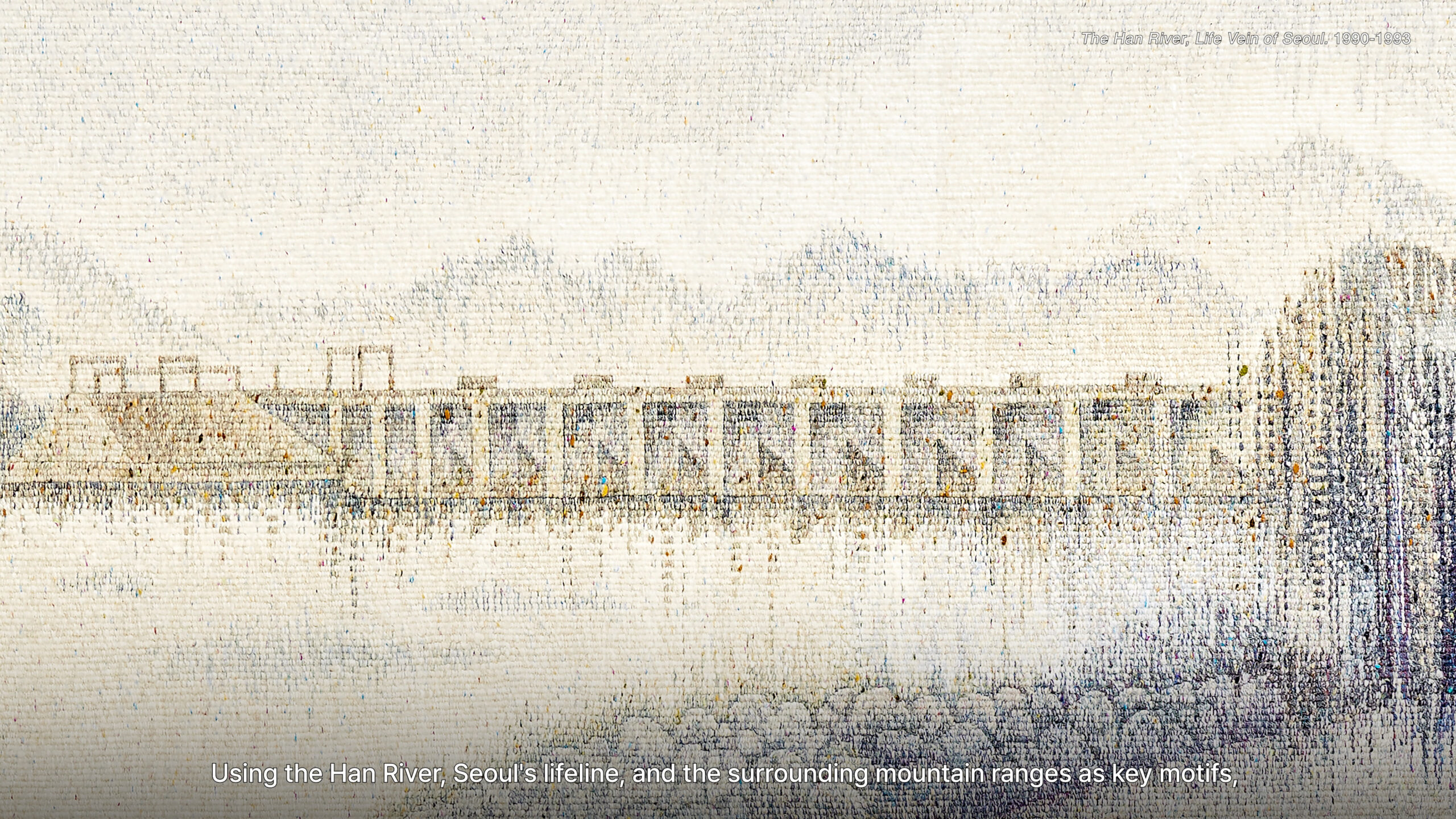
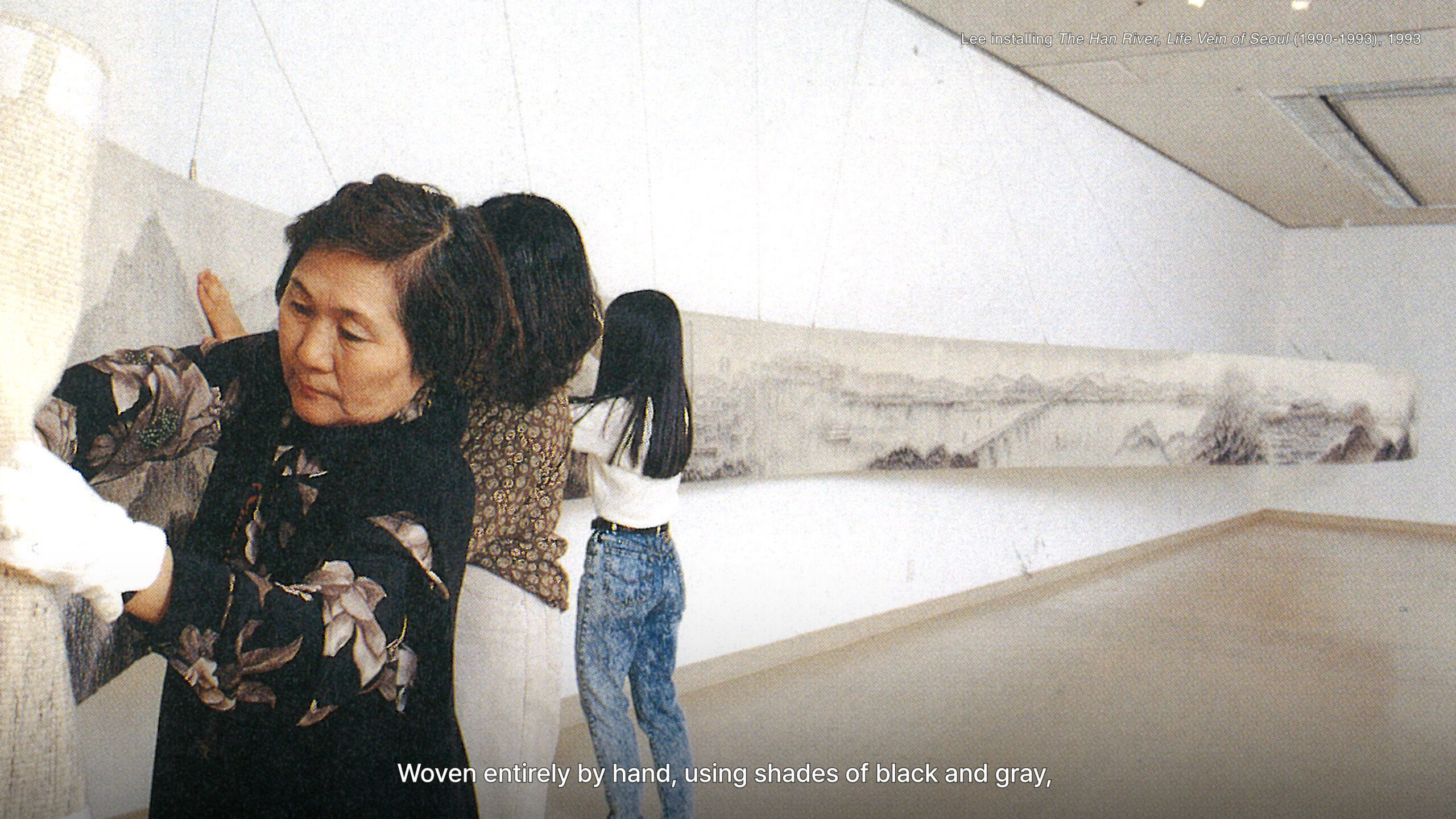
Victoria Sung: The Han River, Life Vein of Seoul, is Lee’s magnum opus, measuring 19 meters in length. Using the Han River, Seoul’s lifeline, and the surrounding mountain ranges as key motifs, she poured her energy day and night into finishing the work over a period of three years. Woven entirely by hand, using shades of black and gray, the tapestry is reminiscent of the history of Korean ink wash landscapes.

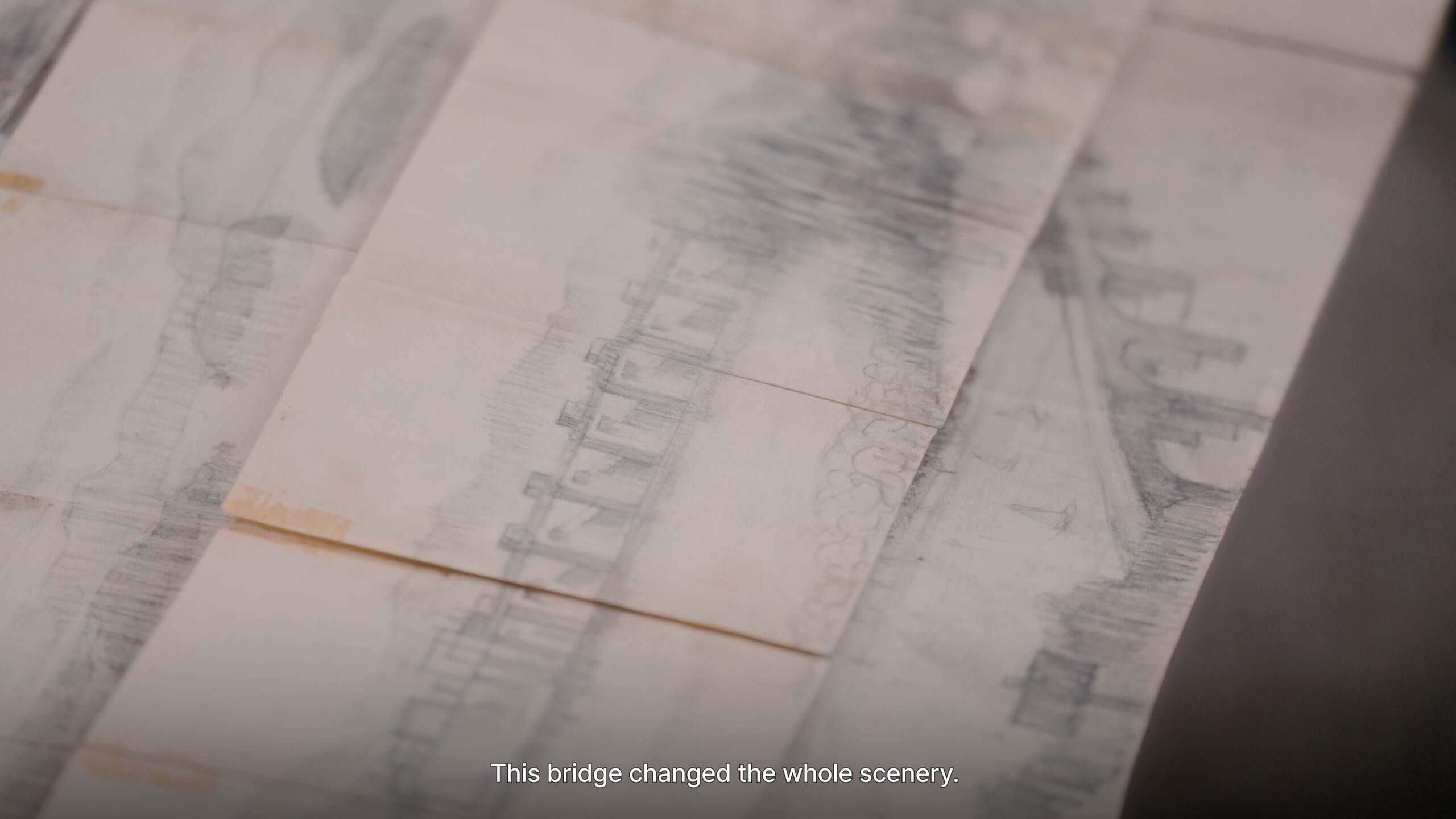
이신자: 어디 가버렸네, 다리가 생기면서 아마 이쪽일 거야. 이런 다리 만들면서 변했지.

Lee ShinJa: Let me see—with the bridge being built—it’s probably over this way now. This bridge changed the whole scenery.

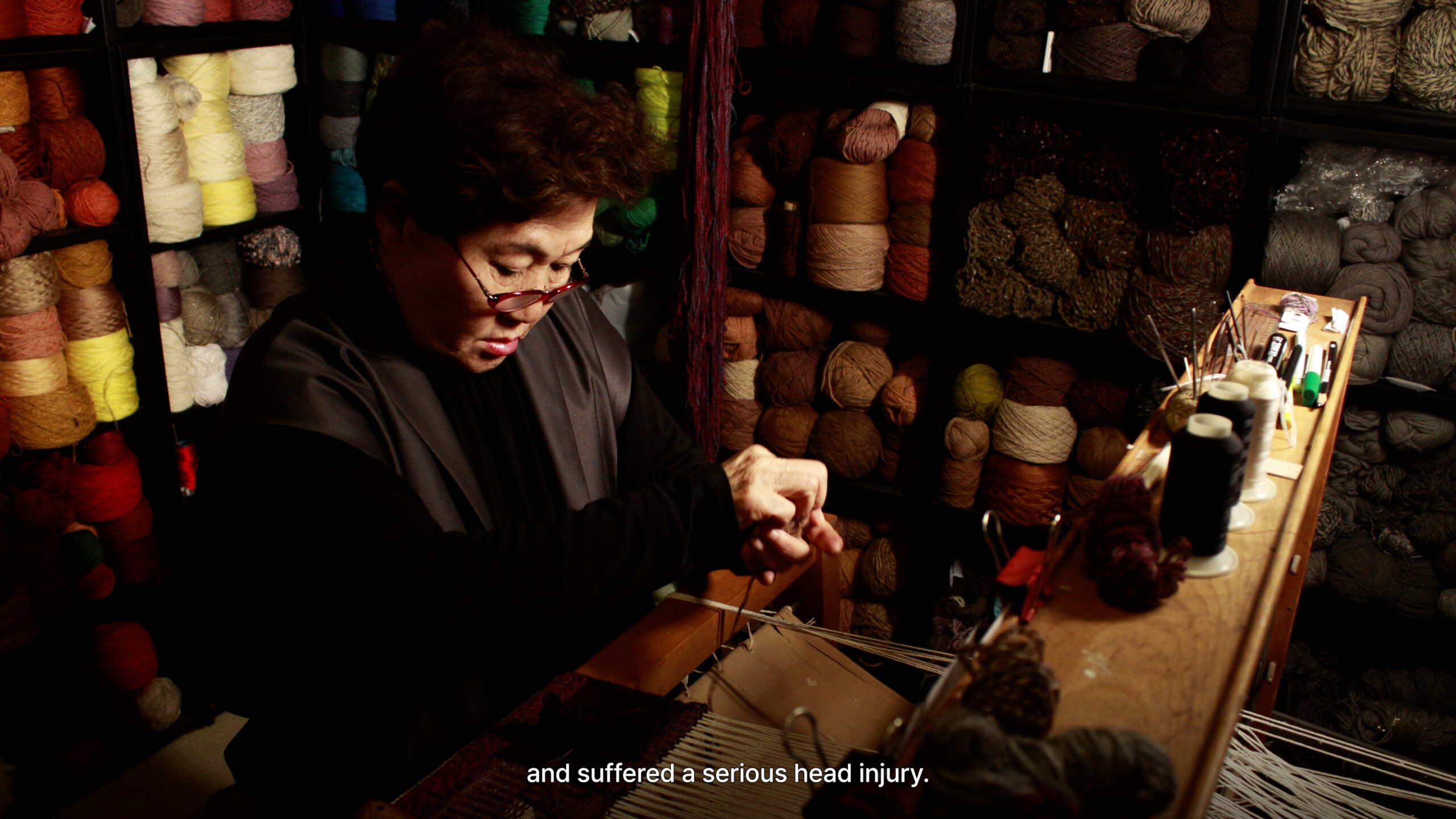
장운산: 이 작품을 진행하실 때 어머니께서는 서울 정도 600년을 기념하는 기념비적인 작품을 남기고 싶어 하셨어요. 밤낮 없이 작업에 몰두하셨고 한 번은 사다리 위에서 떨어져 머리를 크게 다치셔서 한 달간 입원하셨는데도 바로 작업실에 달려가서 작업을 이어갔죠.

Sang Gon Jang: When she worked on The Han River, Life Vein of Seoul, She said she wanted it to be a monumental work. Commemorating the 600th anniversary of Seoul as the capital. She worked tirelessly, day and night. I remember once she fell from a ladder and suffered a serious head injury. Even after a month in the hospital, She went straight back to her studio to continue working. Her dedication was remarkable.

Victoria Sung: Fom the mid-1990s, Lee’s work saw another shift. She started dividing the pictorial plane into different segments and combining metal elements with the woven elements to highlight the interplay between their contrasting material properties. In contrast to her earlier works, which emphasized organic, rounded forms across a horizontal picture plane, this period also marked the emergence of a visual language that sought to Embed the illusion of perspectival depth into her compositions through the insertion of a metal-framed picture window.

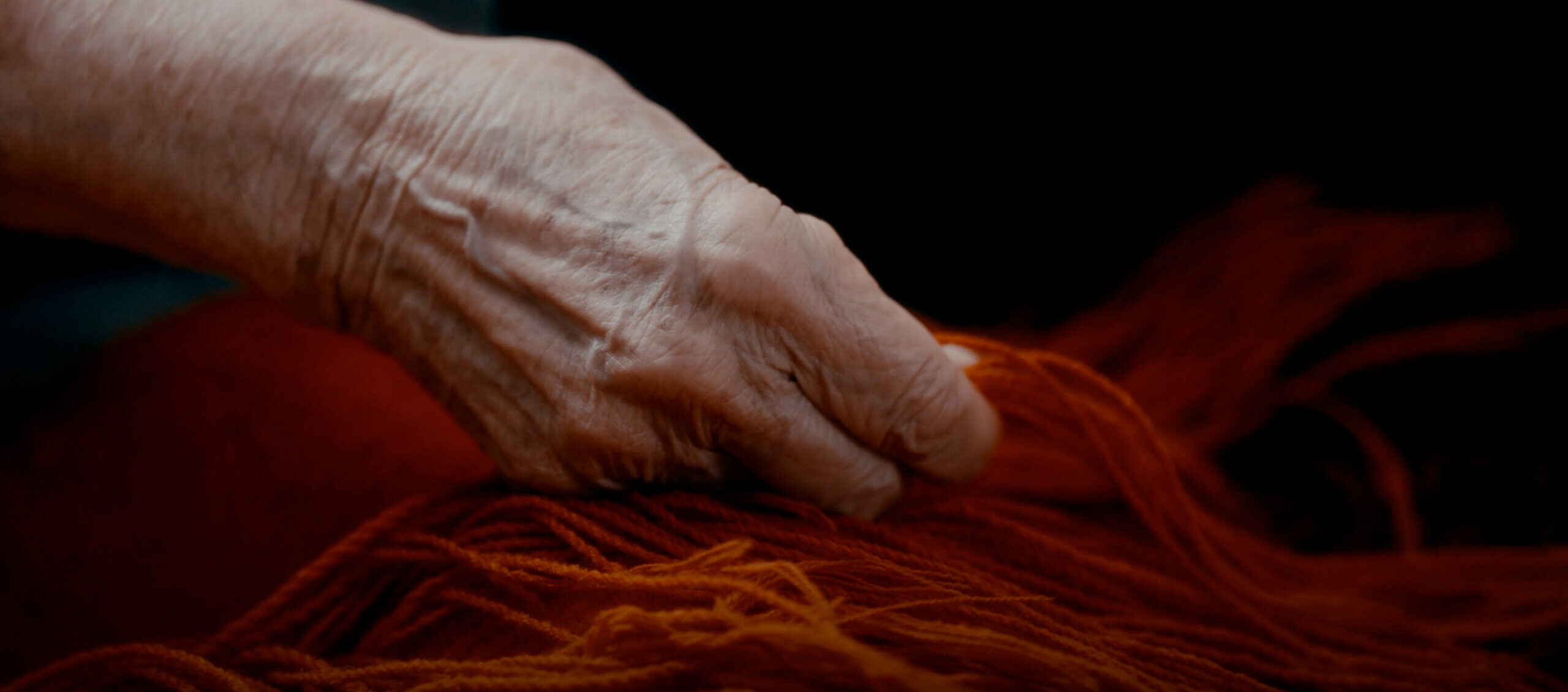
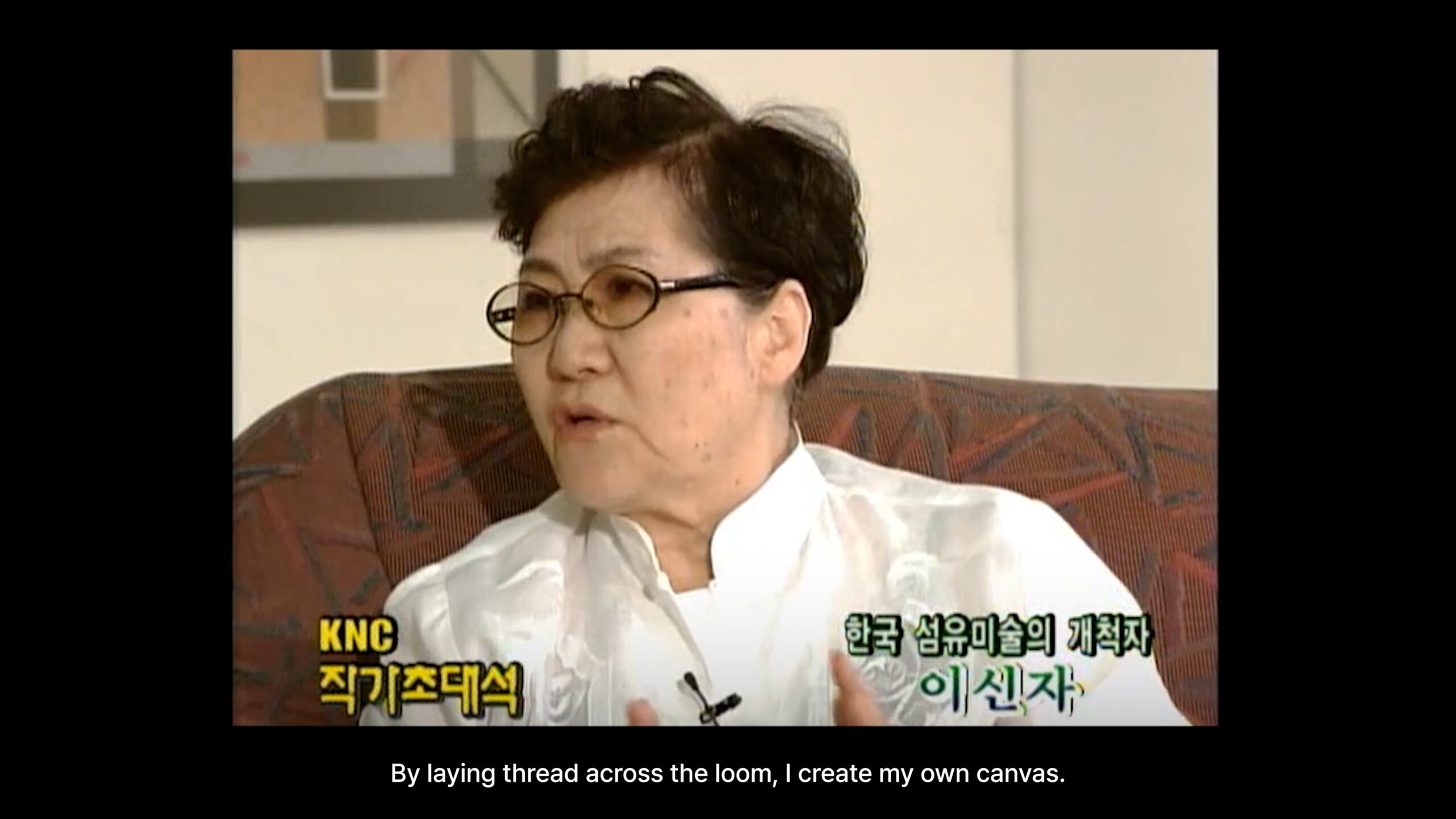
이신자: 천은 서양화가의 캔버스가 되는 거죠. 그렇지만 제가 지금 하고 있는 작업은 천이 아니거든요. 실이 걸리거든요. 그게 캔버스가 되죠. 그리고 실은 유화의 물감이나 마찬가지죠. 실을 섞어가면서 그걸 만들어 나가니까. 그러니까 저는 짠다 스티치를 한다 이럴 때는 언제든지 그림을 실로 그린다 이 생각을 하기 때문에 자유롭게 할 수 있었어요.

Lee ShinJa: Fabric is my canvas, the way a canvas is to a painter. But my work isn’t just fabric itself. By laying thread across the loom, I create my own canvas. The threads become my paint — just as paint does for a painter. When I weave or stitch with threads that I plied, I think of it as drawing with thread. That’s what allows me to work the way I do — freely.

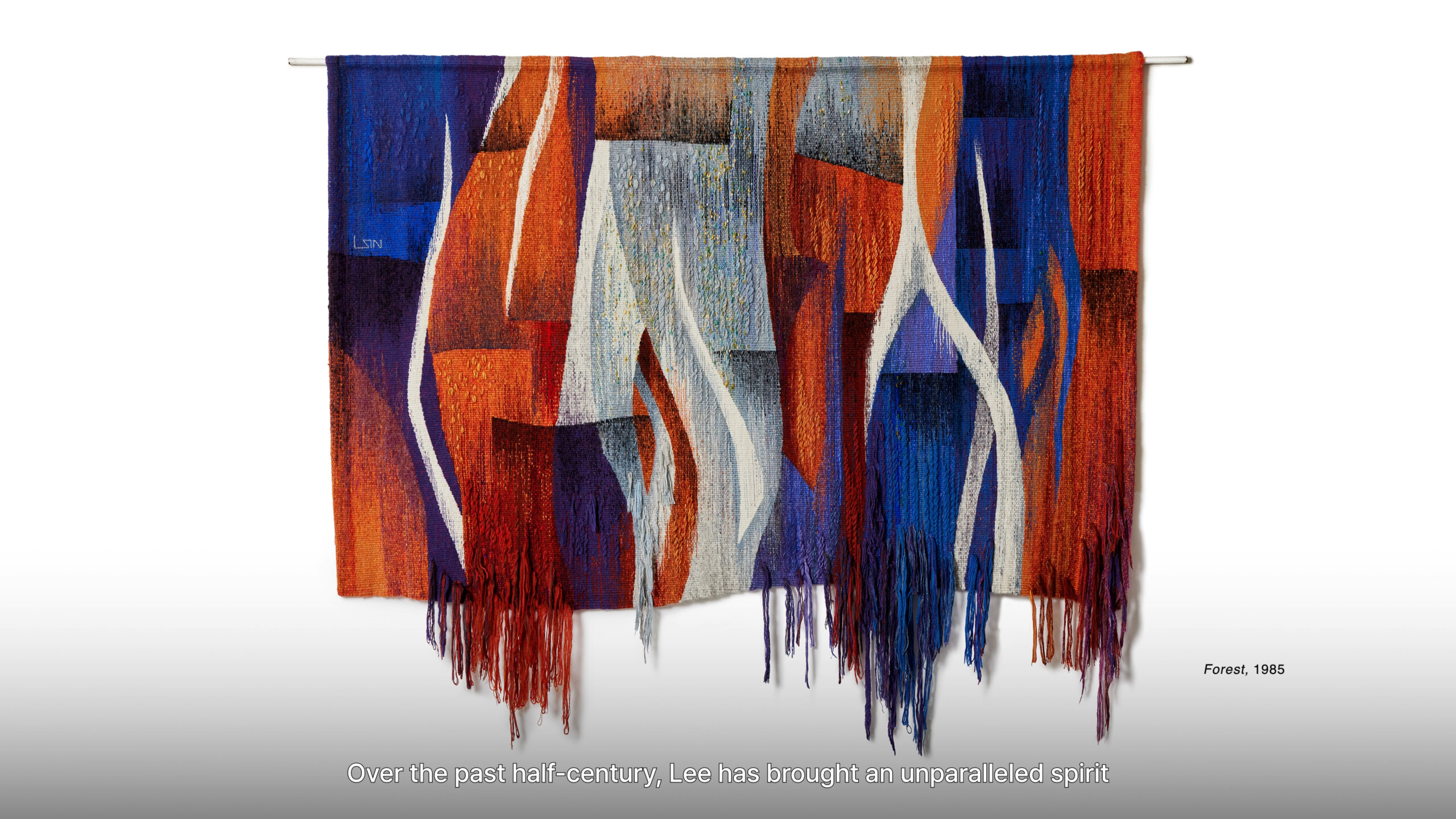
Victoria Sung: Over the past half-century, Lee has brought an unparalleled spirit of resourcefulness and innovation to her artistic practice, bringing together art and craft, found and made objects, and figuration and abstraction. Her body of work evinces the visionary output of an artist who, for decades, has pioneered pathways for understanding the expansive potential of fiber in Korea and beyond.