National Museum of Modern and Contemporary Art, Korea (Gwacheon)
MMCA Collection: Korean Modern and Contemporary Art I
2025
Client National Museum of Modern and Contemporary Art, Korea (Gwacheon)
Project MMCA Collection: Korean Modern and Contemporary Art I

국립현대미술관 과천관
MMCA 과천 상설전 «한국근현대미술 I»
큐레이터 | 이수정
2025.05.01 – 2027.06.27

National Museum of Modern and Contemporary Art, Korea (Gwacheon)
MMCA Collection: Korean Modern and Contemporary Art I
Curator | YI SOOJUNG
2025.05.01 – 2027.06.27

크레딧 보기

Director : Lee Meejee
AI Program: Midjourney, Nano banana, Kling, Runway

이 영상에서 사용한 모든 이미지는 국립현대미술관 소장품으로 저작권은 다음과 같습니다.
※ 국립현대미술관 소장품 이미지는 저작권법에 따라 복제뿐만 아니라 전송, 배포 등 어떠한 방식으로든 무단 이용할 수 없으며, 영리적인 목적으로 사용할 경우 원작자에게 별도의 동의를 받아야함을 알려드립니다.

All images used in this film are from the collection of the National Museum of Modern and Contemporary Art, and the copyright is as follows.
※ Images from the collection of the National Museum of Modern and Contemporary Art may not be used without authorization in any manner, including reproduction, transmission, or distribution, in accordance with copyright law. If used for commercial purposes, separate consent must be obtained from the original creator.

작업 소개

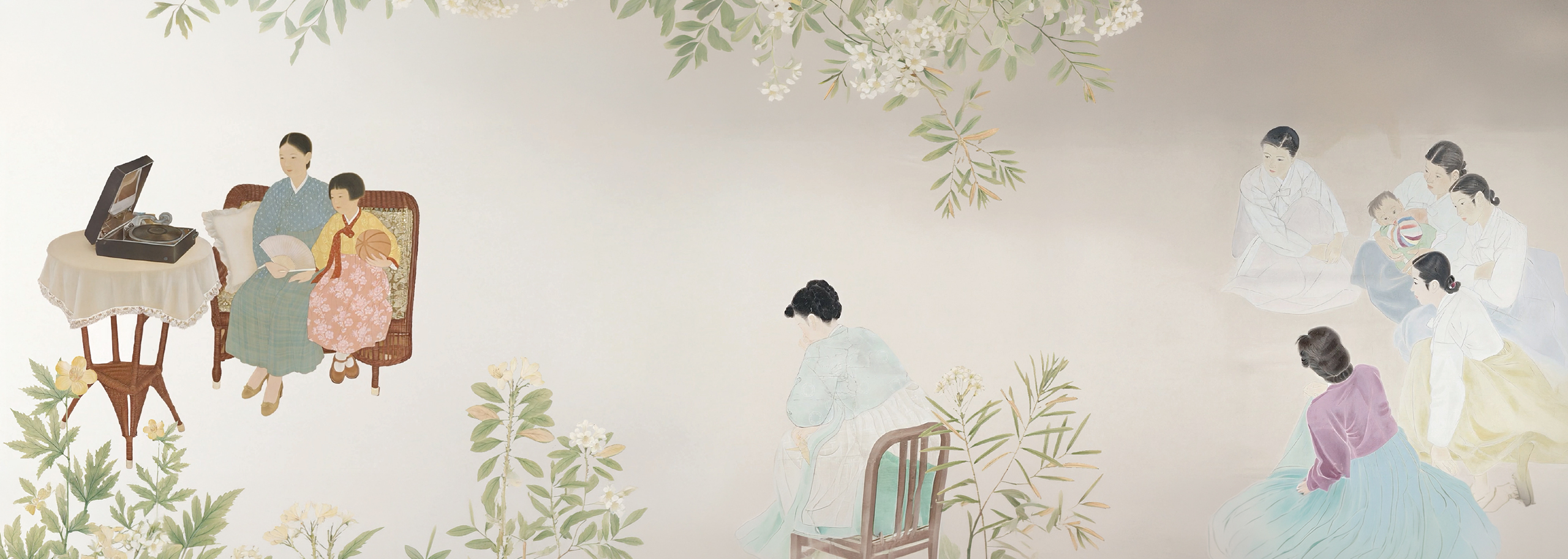
57STUDIO는 국립현대미술관 과천 상설전 《한국근현대미술 Ⅰ》을 위해 전시장 입·출구 벽면에 설치되는 가로형 미디어 패널 콘텐츠를 기획·제작했다. 본 작업은 근대미술을 디지털로 확장하는 데서 나아가, 작품과 오늘의 관람자를 연결하는 ‘창’을 제안한다.

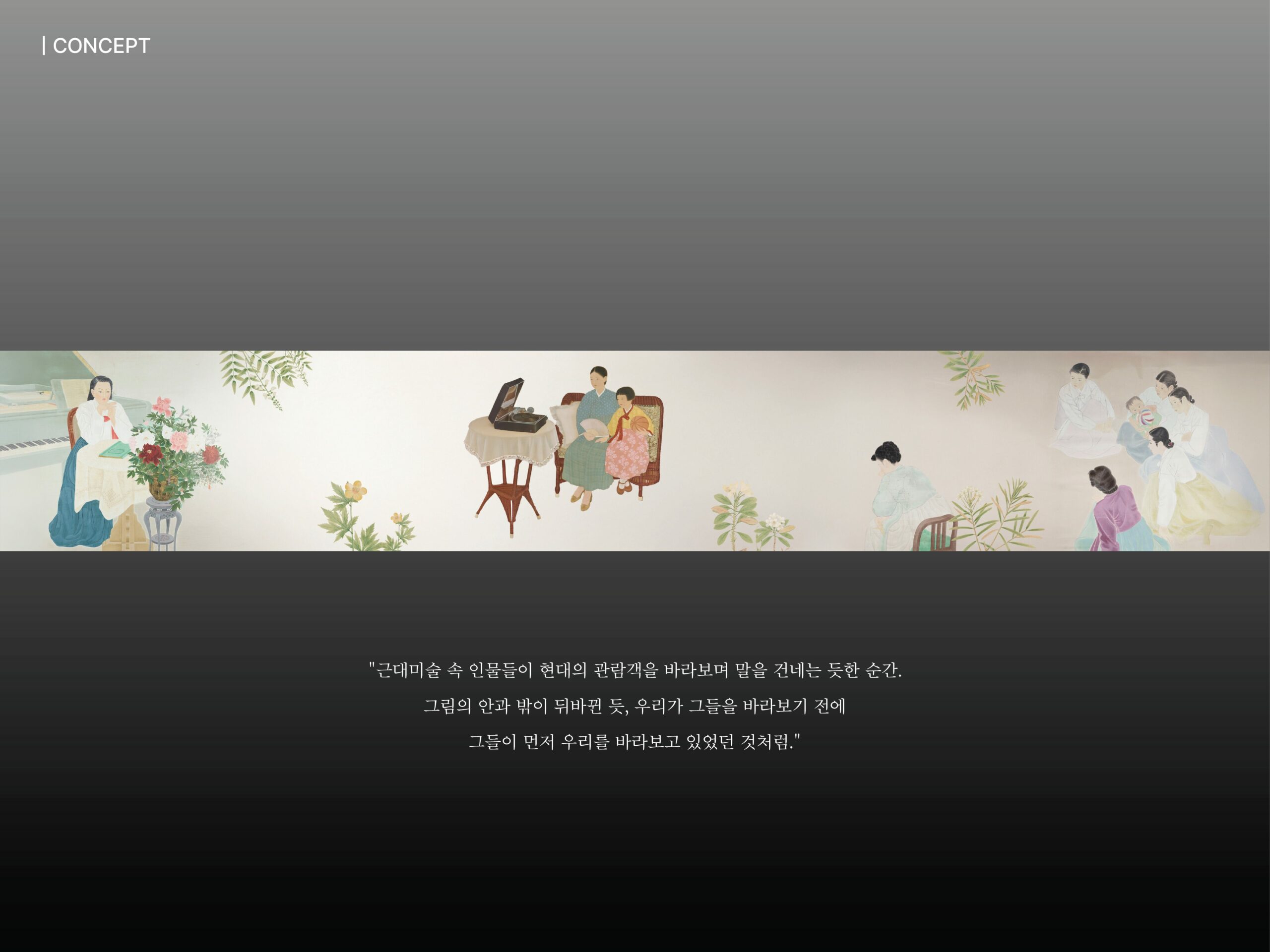
근대 회화 속 인물들이 시간 너머에서 현대의 관람객을 응시하는 장면을 구성함으로써, 감상의 방향을 전환하는 구조를 설계했다. 우리가 그림을 바라보기 이전에, 그림 속 인물이 먼저 우리를 바라보고 있는 순간을 상상하게 한다.

입구 약 7m, 출구 약 5.5m의 가로형 파노라마 LED 패널은 비인터랙티브 영상으로 구성되며, 화면은 큰 변화 없이 서서히 미세하게 전개된다. 이러한 느린 변화는 응시와 기다림의 감각을 형성하며, 근대와 현대, 창작자와 감상자를 연결하는 감각적 장치로 작동한다.

57STUDIO produced horizontal media panel installations for the entrance and exit walls of MMCA Gwacheon’s permanent exhibition, Korean Modern and Contemporary Art I. The project proposes the media wall as a “window” connecting historical artworks with present-day viewers.

Figures within modern paintings appear to gaze across time toward contemporary audiences, subtly shifting the direction of viewing. The structure invites viewers to imagine a moment in which the painted subject looks at us first.

Spanning approximately 7 meters at the entrance and 5.5 meters at the exit, the panoramic LED panels present a non-interactive video that unfolds through gradual, subtle shifts. This restrained movement invites sustained attention, bridging modern and contemporary, creator and viewer.

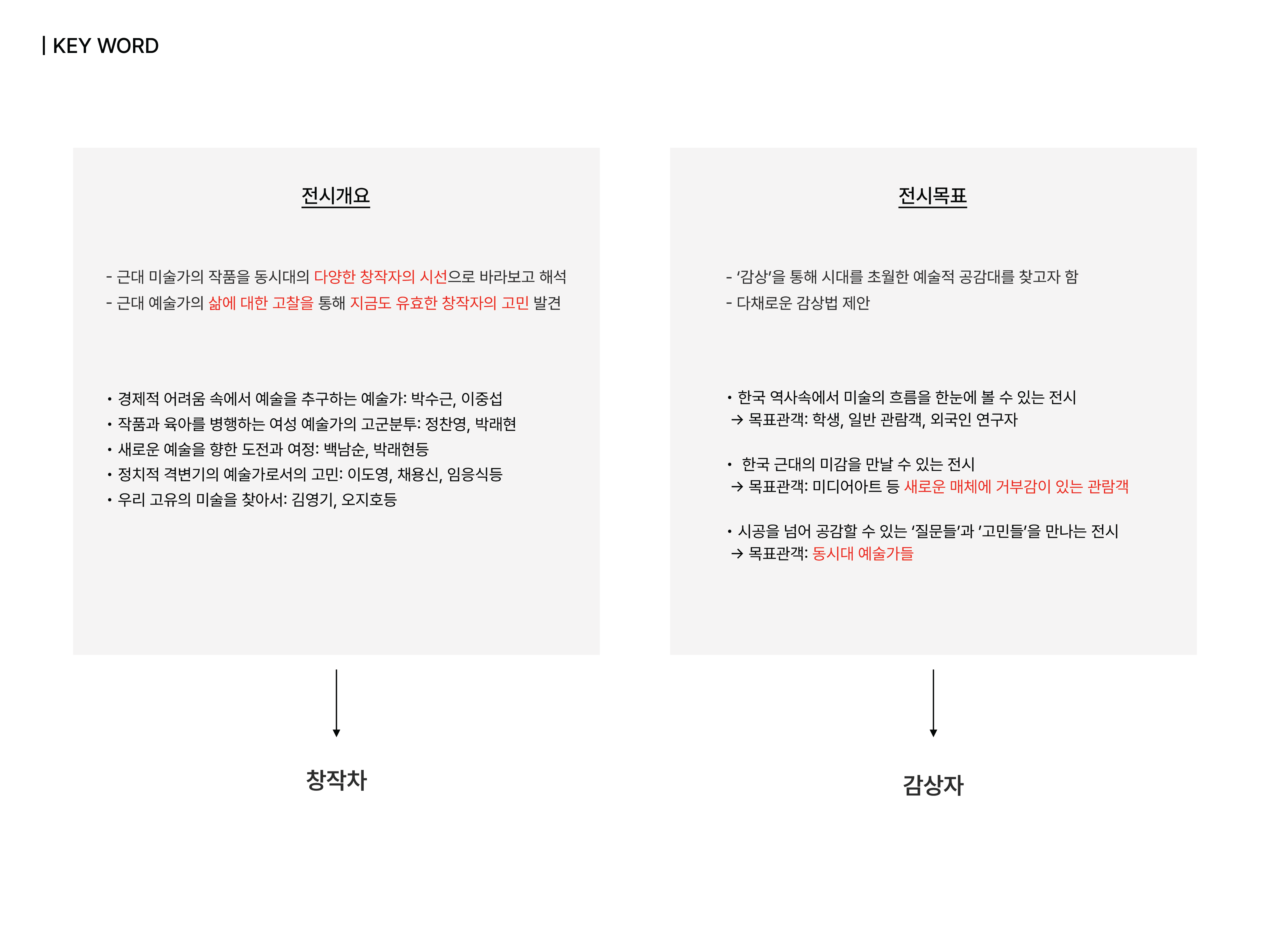
본 전시는 감상을 통해 시대를 초월한 예술적 공감의 지점을 찾는 것을 목표로 한다. 한국 근대미술의 흐름을 조망하면서도, 관람자가 자신의 감각으로 작품을 새롭게 해석할 수 있는 환경을 제안한다.

학생, 일반 관람객, 연구자 등 다양한 층위를 고려하여 직관적인 감상 경험을 설계했으며, 동시대 예술가들에게는 과거 창작자의 질문을 현재의 맥락에서 다시 사유할 수 있는 접점을 제공한다. 미디어 패널은 이러한 목표를 공간적으로 확장하는 장치로 작동한다.

This exhibition aims to foster artistic resonance that transcends time through viewing. While presenting the trajectory of Korean modern art, it encourages visitors to reinterpret the works through their own contemporary sensibilities.

Designed for diverse audiences—including students, general visitors, and researchers—the exhibition offers an intuitive viewing experience. For contemporary artists, it provides a point of reflection where past creative questions can be reconsidered in today’s context. The media panel spatially extends these objectives.

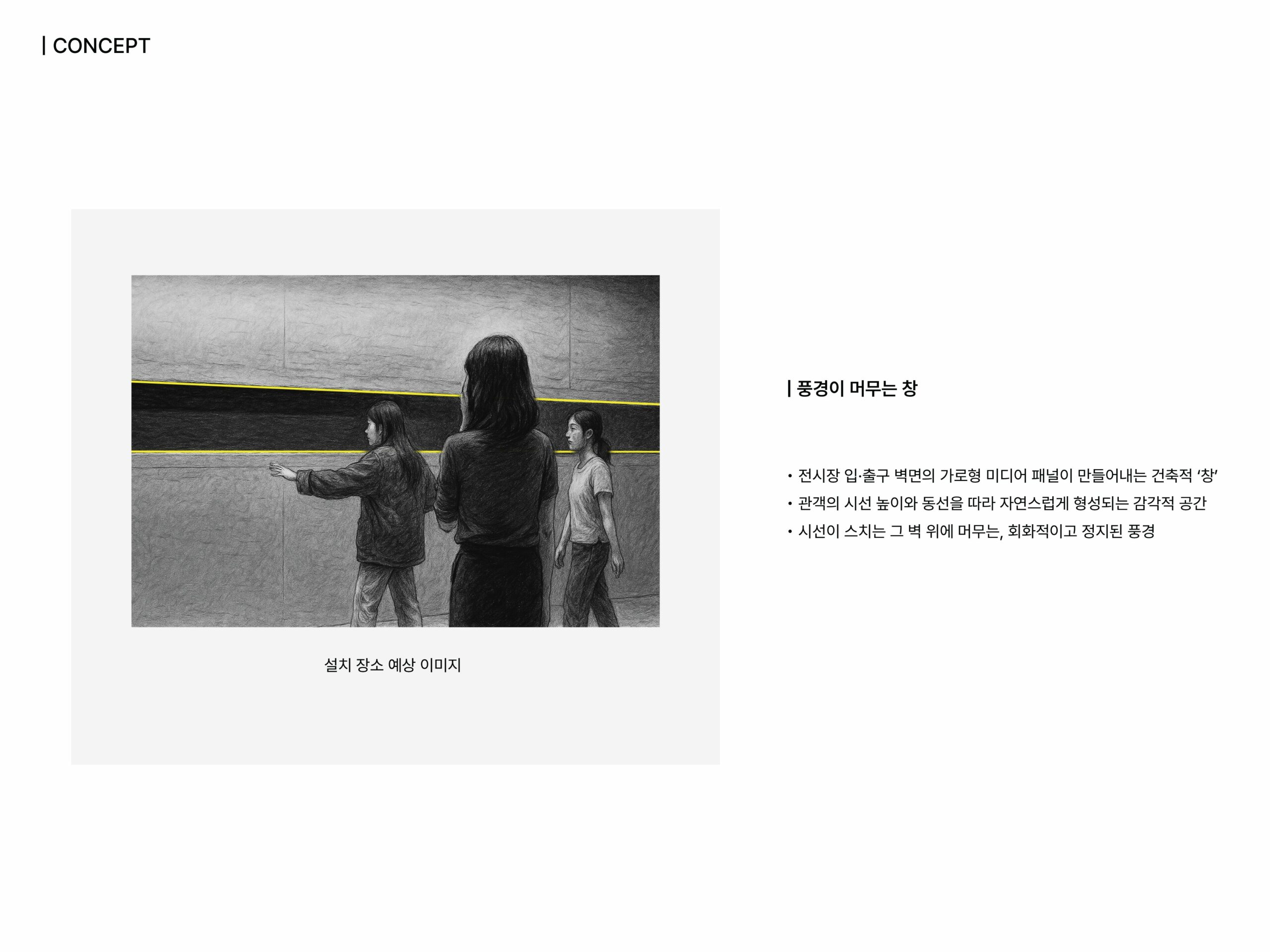
입구와 출구 벽면에 길게 이어지는 가로형 패널은 전시장 안에서 하나의 수평선을 만든다. 관람자는 이동하면서 자연스럽게 그 선을 따라가게 된다. 영상은 크게 변하지 않는다. 장면은 오래 유지되고, 변화는 거의 느껴지지 않을 만큼 천천히 일어난다. 그래서 이 화면은 ‘보는 영상’이라기보다 벽 위에 놓인 하나의 풍경처럼 존재한다. 입구와 출구는 단순한 통로가 아니라, 전시에 들어가기 전과 나오는 순간에 잠시 시선이 멈추는 지점이 된다.

The horizontal panel stretches across the entrance and exit walls, forming a single long horizon inside the exhibition space. As visitors move, their gaze follows this line naturally. The imagery does not shift dramatically. Scenes hold for a long time, and changes occur slowly—almost imperceptibly. The screen feels less like moving image and more like a landscape resting on the wall. The entrance and exit become moments of pause—brief intervals before entering and after leaving the exhibition.

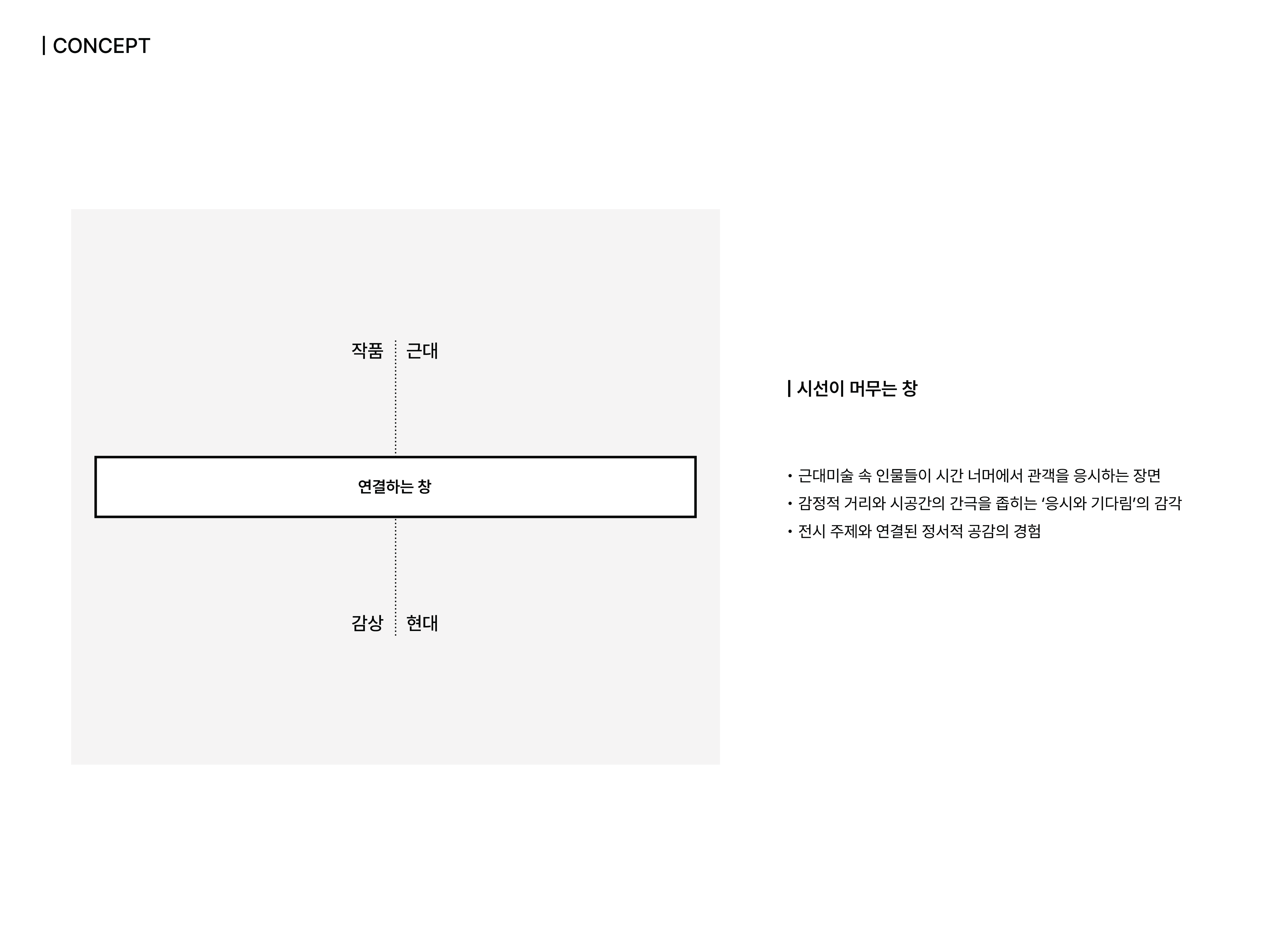
입구와 출구 벽면에 설치된 미디어 패널은 작품과 관람 사이에 놓인 하나의 화면이다. 전시를 보기 전과 본 이후, 관람자는 이 화면을 지나가게 된다. 작품을 직접 보여주는 장치는 아니지만, 전시의 흐름 안에서 하나의 구간을 형성한다. ‘연결하는 창’은 시간을 설명하거나 해석하지 않는다. 다만 작품이 놓인 공간과 관람자의 동선 사이에 조용히 위치한다.

Installed along the entrance and exit walls, the media panel sits between the artwork and the viewer. Visitors encounter it before entering and after leaving the main exhibition space. It does not replace the works, but forms a distinct segment within the overall flow. The “connecting window” does not interpret time; it simply occupies the space between the artwork and the viewer’s movement.

“근대미술 속 인물들이 현대의 관람객을 바라보며 말을 건네는 듯한 순간.
그림의 안과 밖이 뒤바뀐 듯, 우리가 그들을 바라보기 전에
그들이 먼저 우리를 바라보고 있었던 것처럼.”

“A moment when figures in modern paintings seem to look toward the contemporary viewer, as if speaking to them.
As though the inside and outside of the painting were reversed—
as if they had been looking at us before we began looking at them.”

나의 작품 세계에 있어서 새로운 동양화,
그것은 ‘새로운 동양화’라고 구태여 말할 것은 없다.
다만 작가 자신이 환경과 필연적으로 부딪쳐야 하는 시대적 환경 여건 아래서
새롭게 발전시킨다는 것이 옳을 것이다.
– 김기창

In my artistic world, what some call a ‘new form of Eastern painting’
there’s no need to label it as such.
Rather, it’s simply the artist naturally evolving under the circumstances of an era
that inevitably collides with their surroundings.
– Kim Kichang

회화는 기술이 아니다. 혹자는 말하되 시(¾)는 회화라 하더라.
나는 회화는 시라고도 하고 싶다. 시가 없는 화면으로 회화를 말하지 말 것이다.
– 구본웅

Painting is not a matter of technique. Some say poetry is painting-I would say painting is poetry.
One should not speak of painting on a canvas that lacks poetry.
– Gu Bonung

앓아누워있느라고 한달쯤 화필을 놓았었지만 줄곧 그리고 있어요.
…나는 언제고 화가이고 싶어.
– 이영일

Though I had to set my brush aside for about a month due to illness, I’ve been painting constantly.
… I always want to be a painter.
– Lee Young-il

뱃머리 흰 구름 사이로 가니 겹겹 안개 속 지나면 또 구름안개 나온다.
언뜻 햇살 비추니 칼을 세운 듯 서있구려.
금강산 한 번 보면 다시 무슨 산 또 있을까.
– 김규진

As I go between the white clouds at the bow, mist upon mist follows, then clouds and mist again.
When the sunlight briefly breaks through, it stands like a sword, upright and sharp.
Once you’ve seen Mount Geumgang, what other mountain could compare?
– Kim Kyujin

하다보니 내가 그리는 그 인물들하고는 정신이 오고가는 거예요.
정신적 교감이라고나 할까요.
– 김인승

As I continued, I found myself exchanging spirits with the figures I painted.
You might call it a kind of spiritual communion.
– Kim Insoong

색채는 곧 빛이요, 빛은 곧 생명의 원천이다.
그렇다면 색채는 생명체에 대하여 ‘기쁨’이 아닐 수 없다.
– 오지호

Color is light itself, and light is the source of life.
Therefore, to living beings, color cannot help but be a joy.
– Oh Chiho